Lush, colorful, low maintenance, and winter hardy, landscaping in the fence-line garden beds.
Concerns:
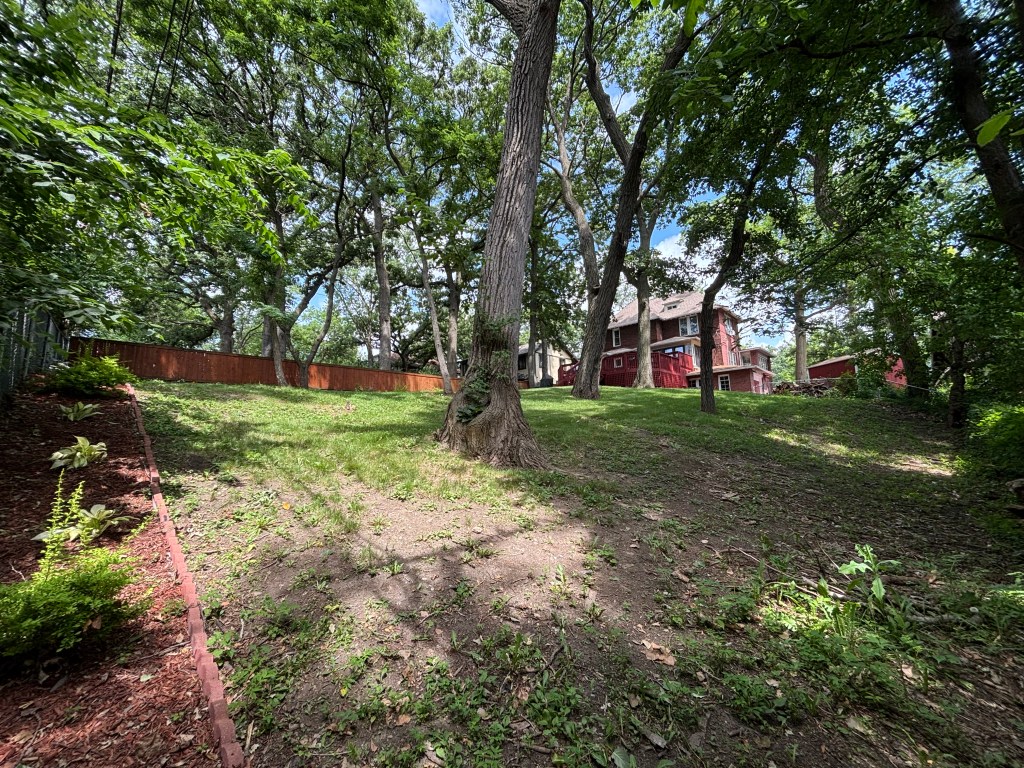
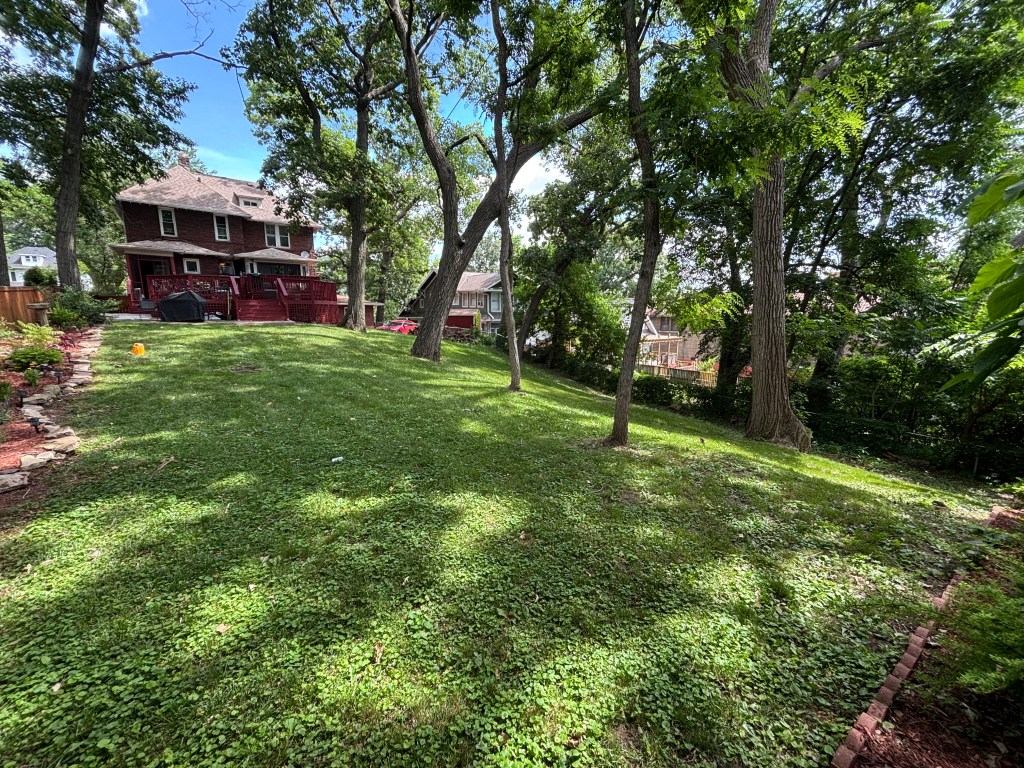
The very steep hill (even for me). The homeowner, an older woman, was unlikely to traverse that hill frequently and there was no water source that reached to the bottom of the hill, meaning she would have to hand water the plants at the bottom and go up and down the hill to fill the water can.
The prior landscaper she hired did very little consulting with the homeowner about the types of plants they chose or the maintenance required. About half of the shrubs they planted died within the year but there was little visual interest or color at a very high cost.
Another angle of the hillOriginal plant bedsNo contrast, no color
Plan:
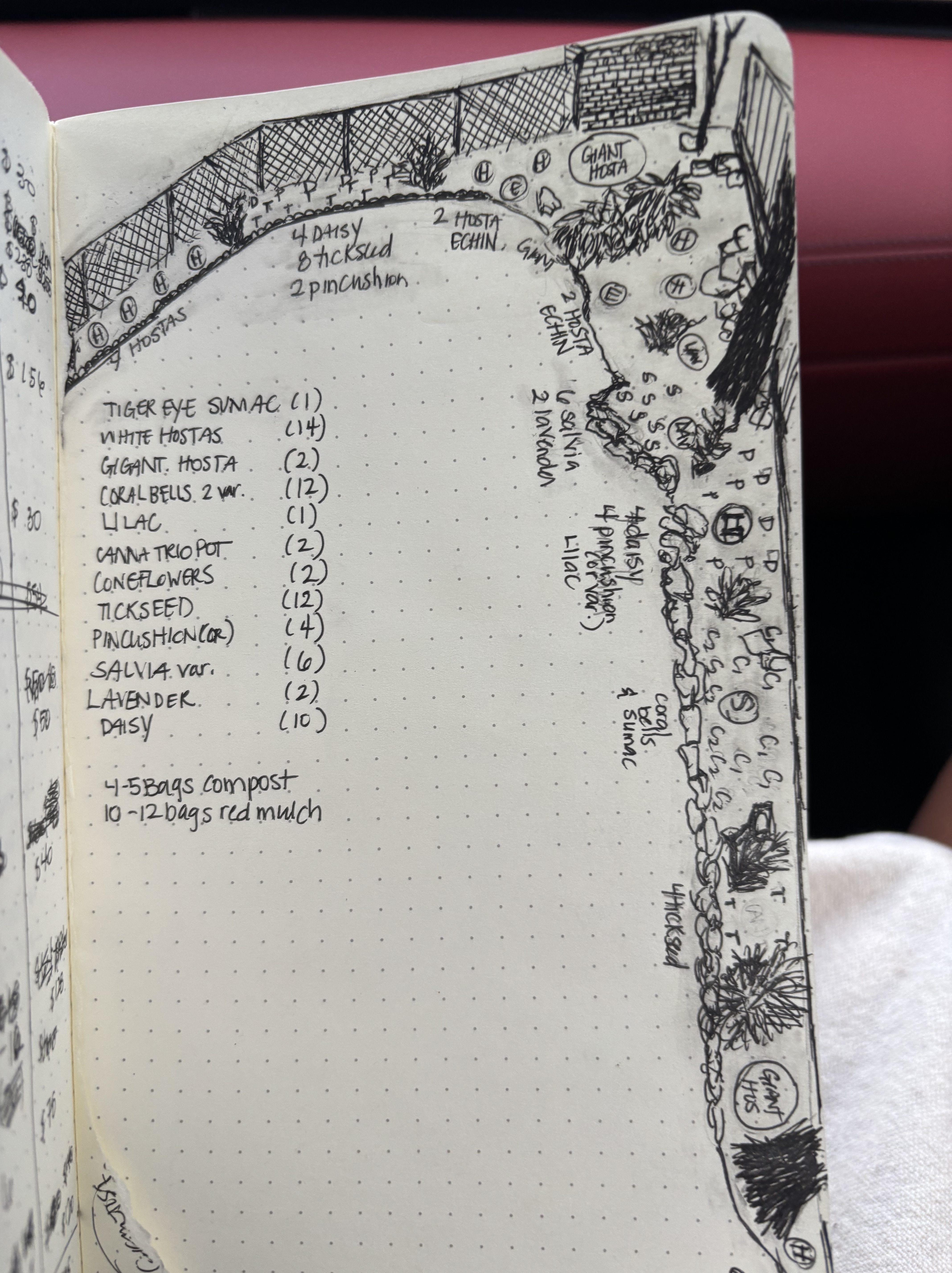
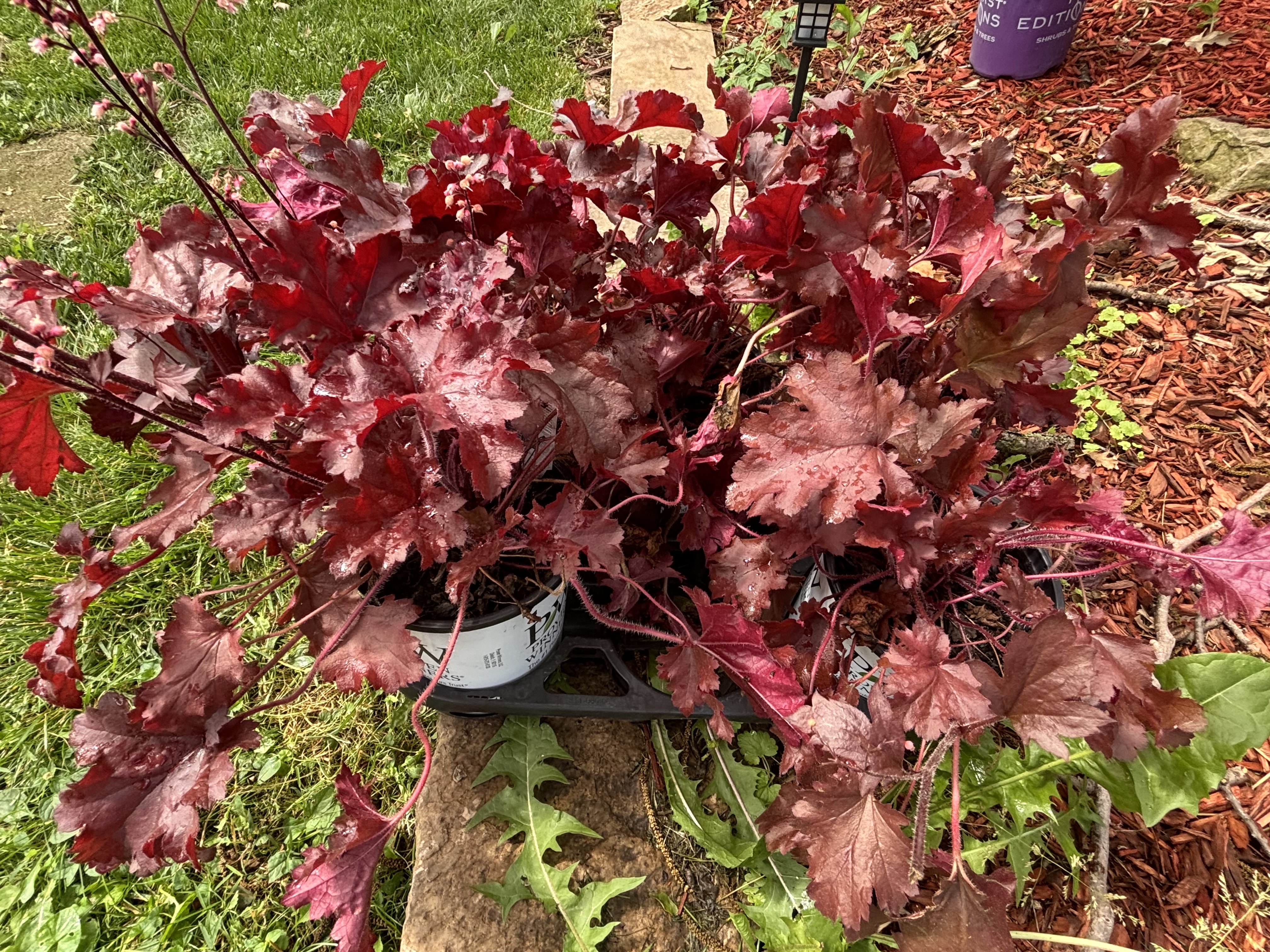
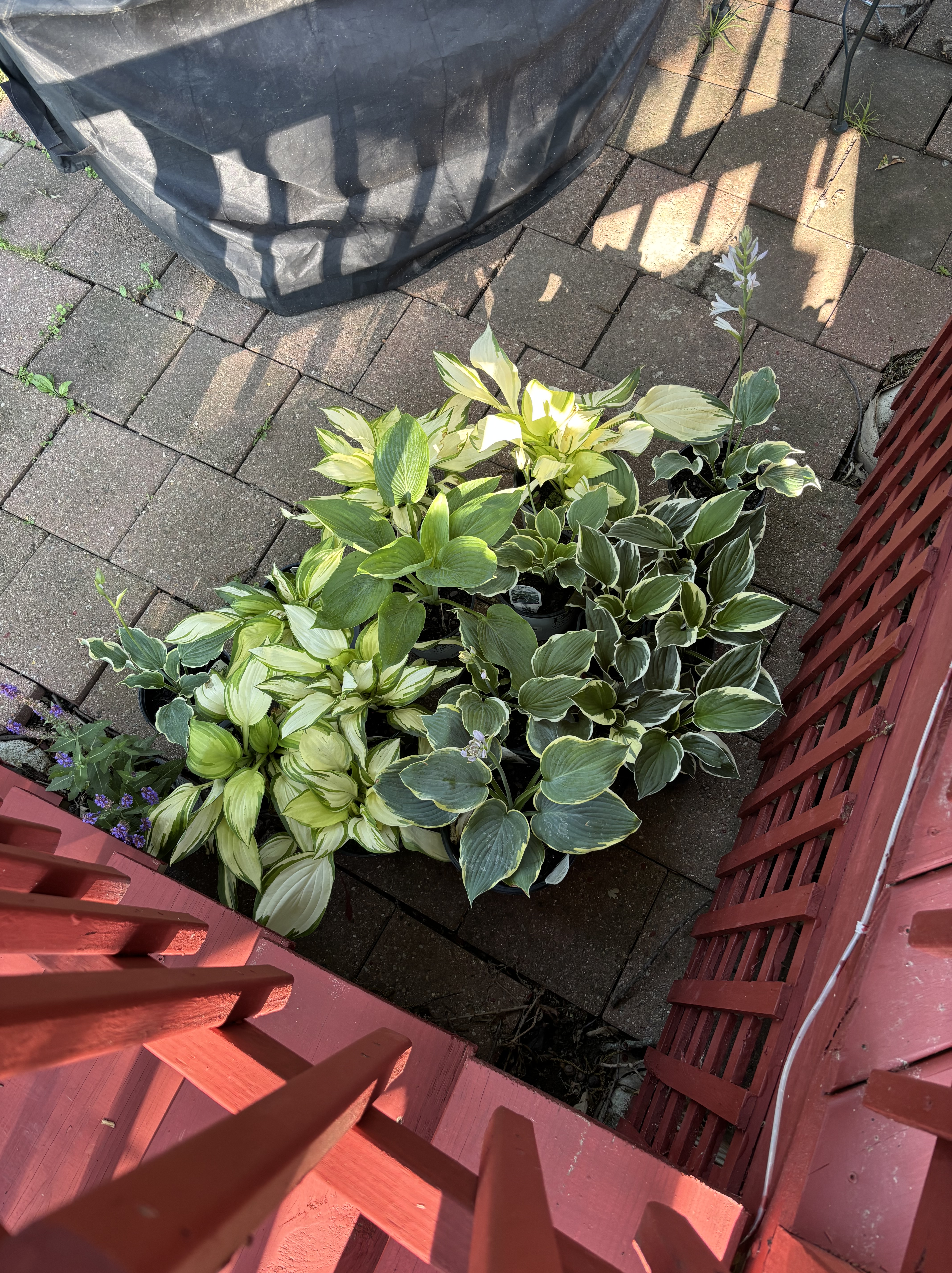
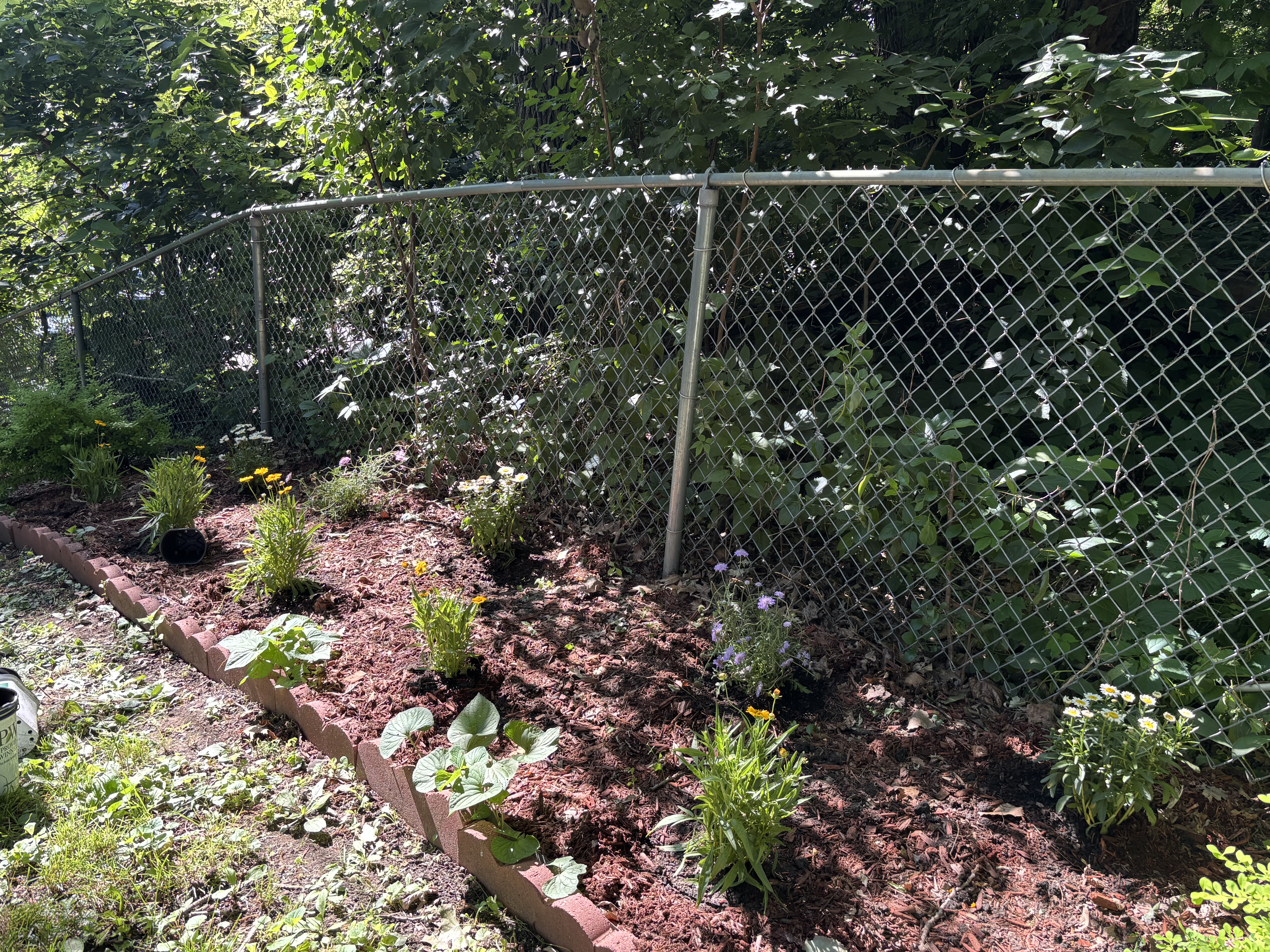
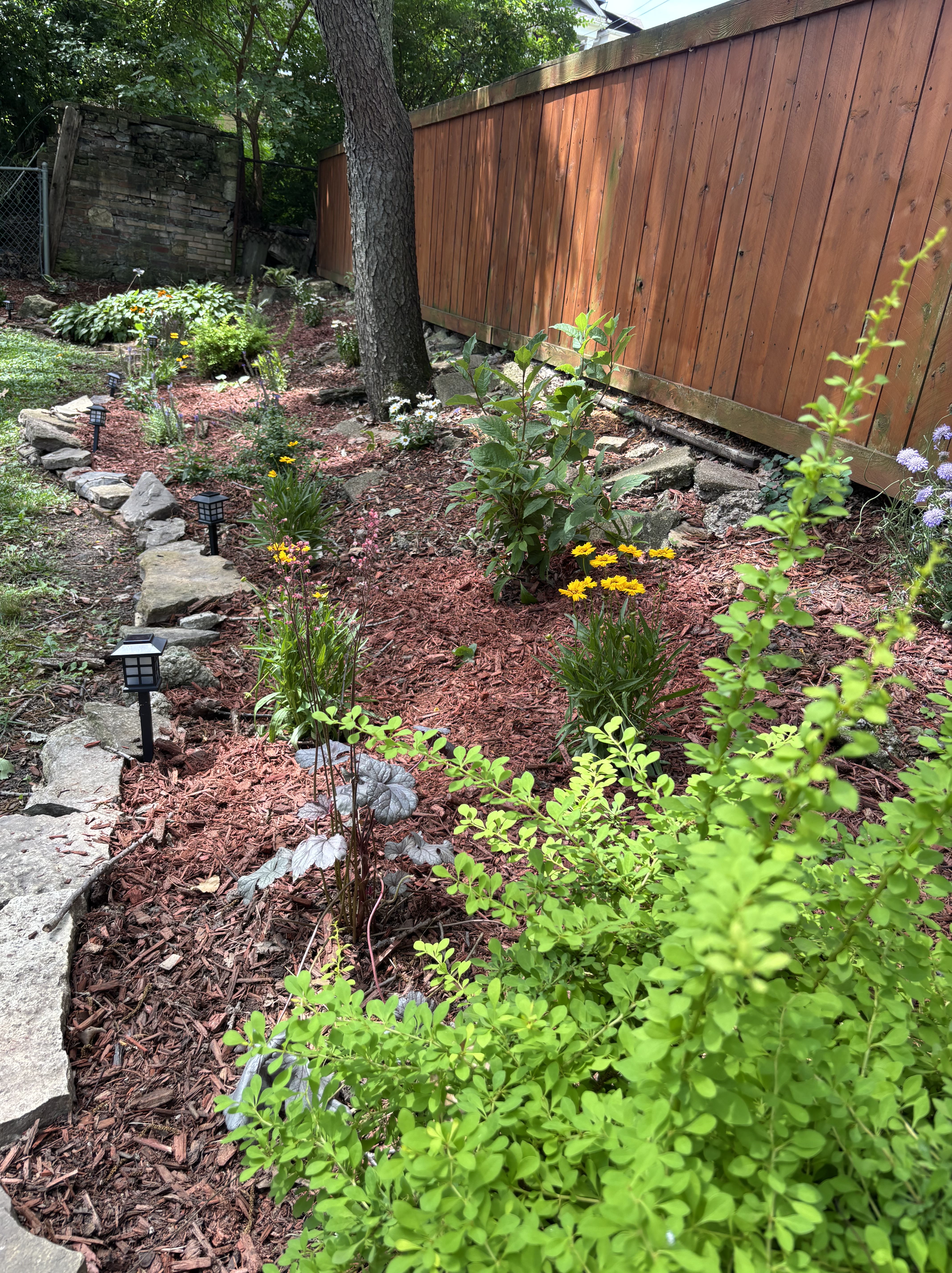
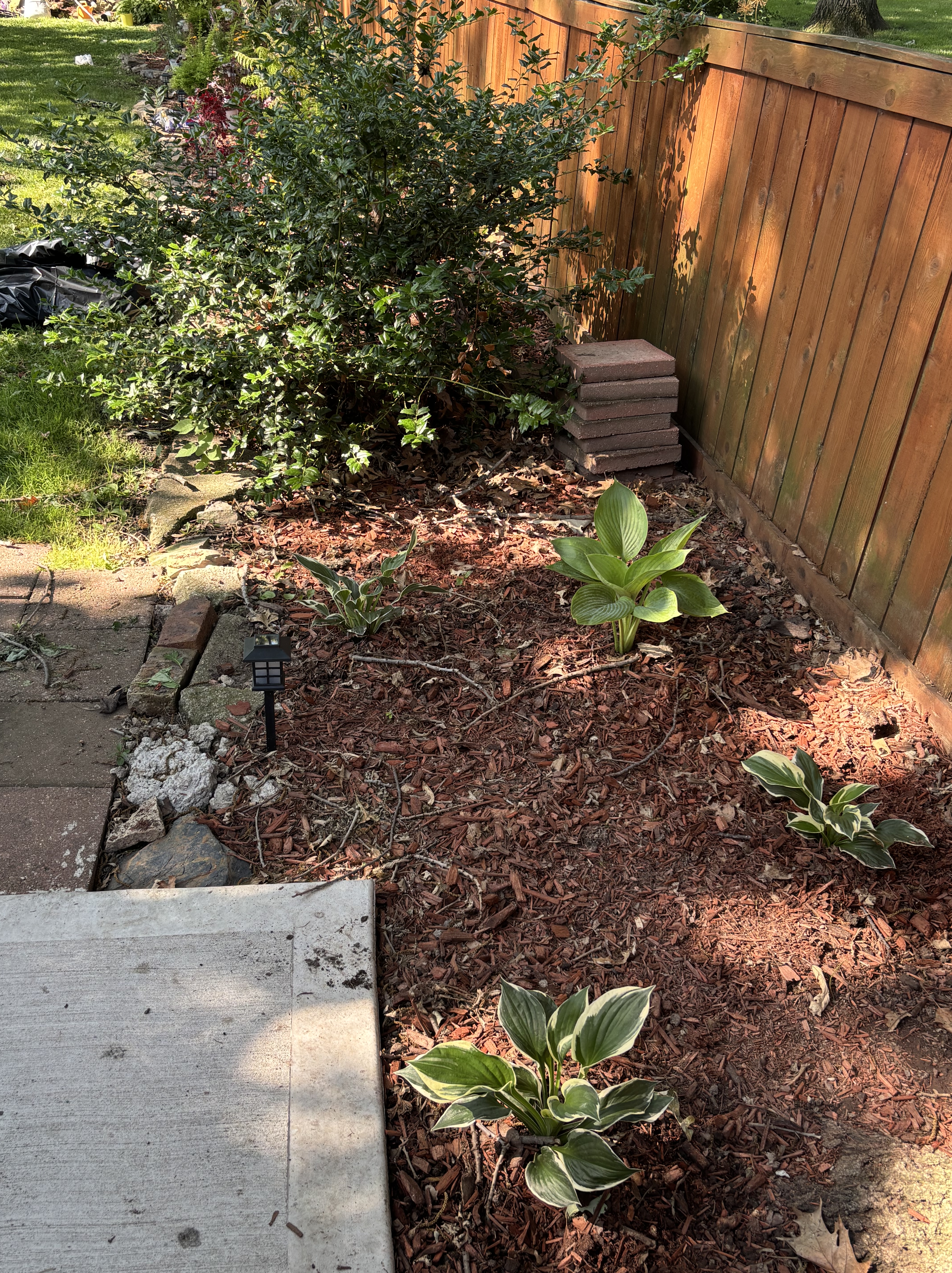
Use only perennial flowers that spread, self seed, add color, and come back after a freeze. Incorporate greenery that fills out – hostas – in varying colors and sizes.
Materials:
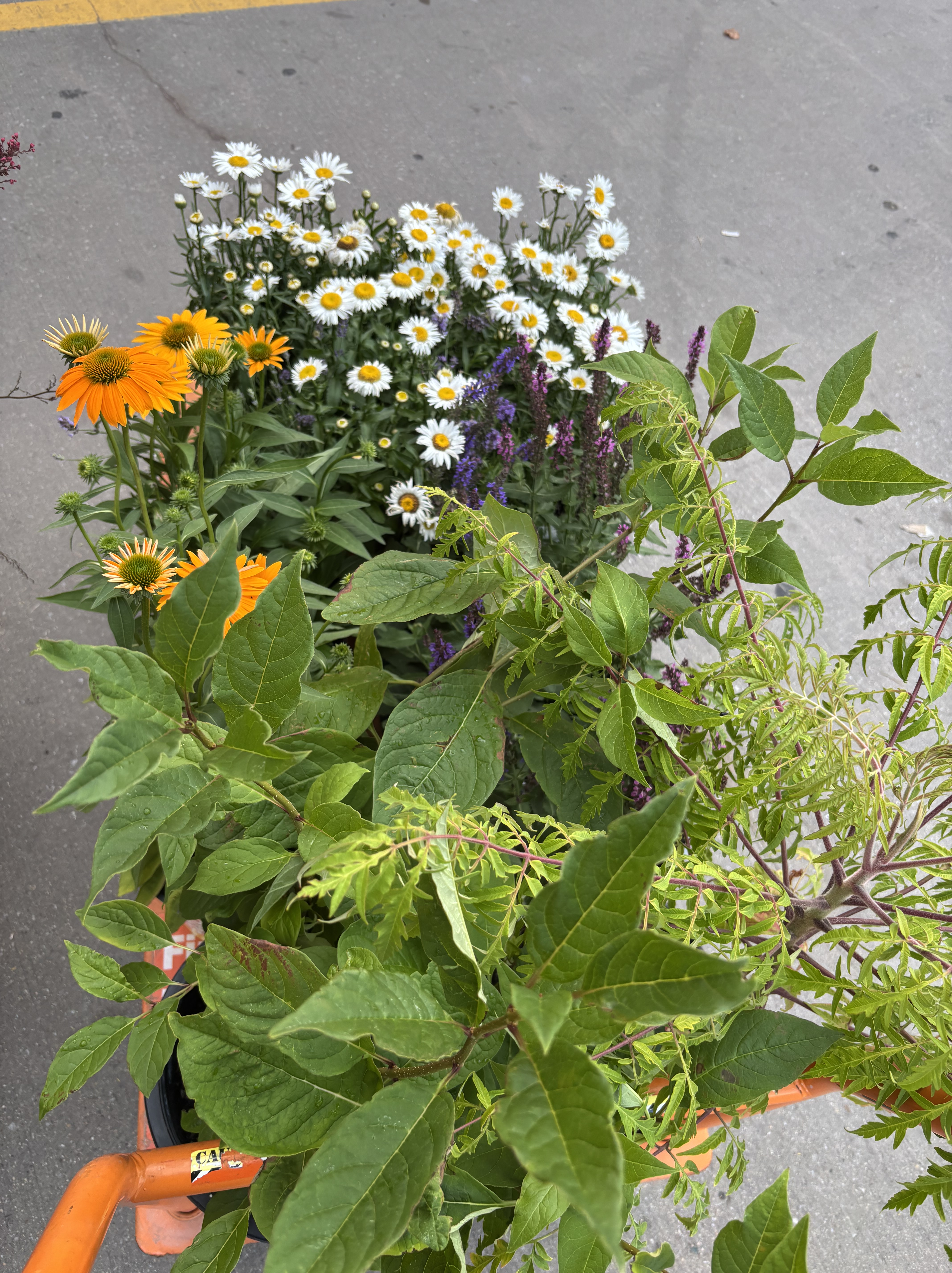
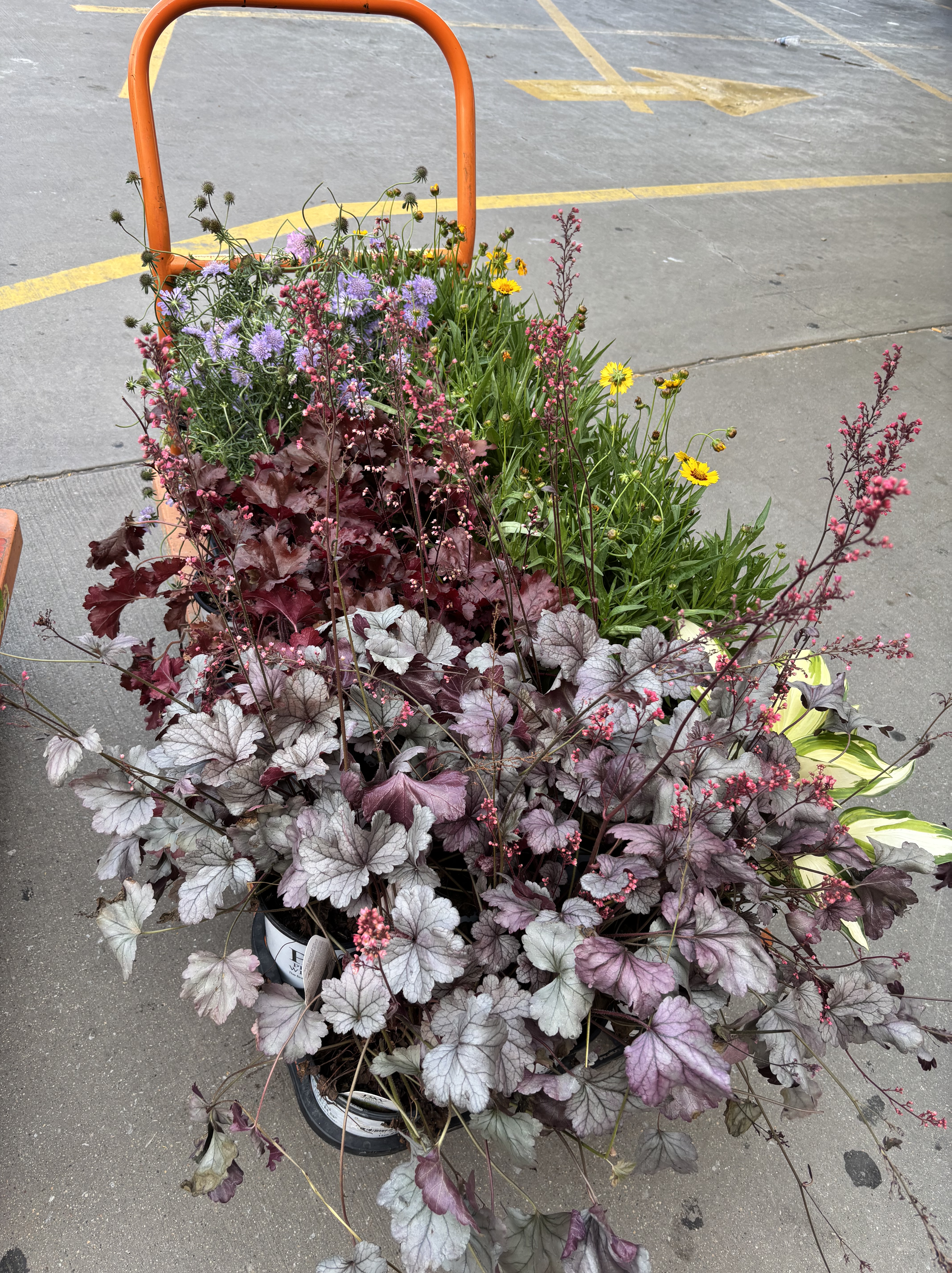
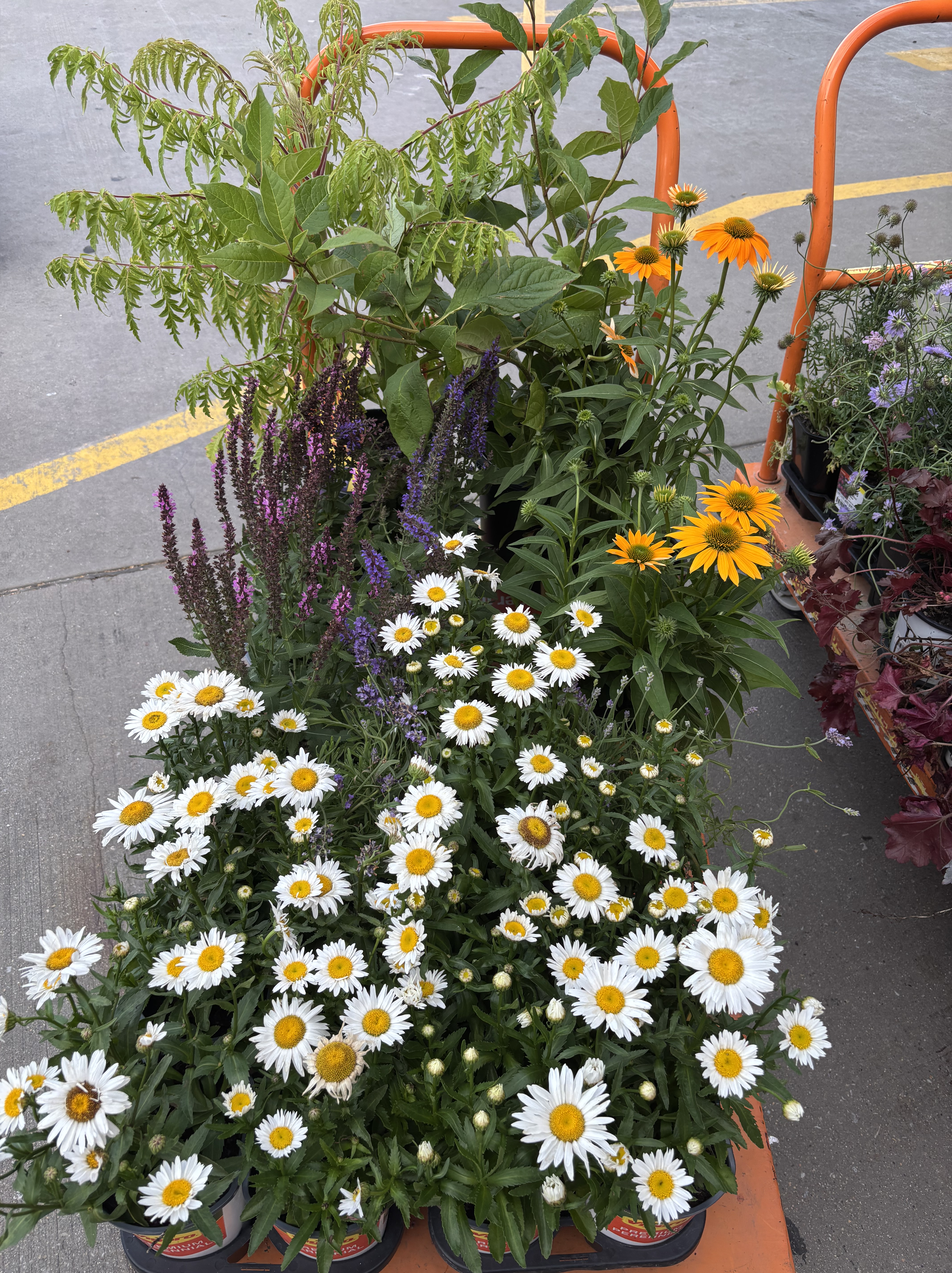
All the plants and soil came from Home Depot and mulch from Menard’s. We considered some of the plant nurseries, but they were farther away than she wanted to commute and were priced higher than the budget she had in mind for the size and quantity of plants.
The Installation:
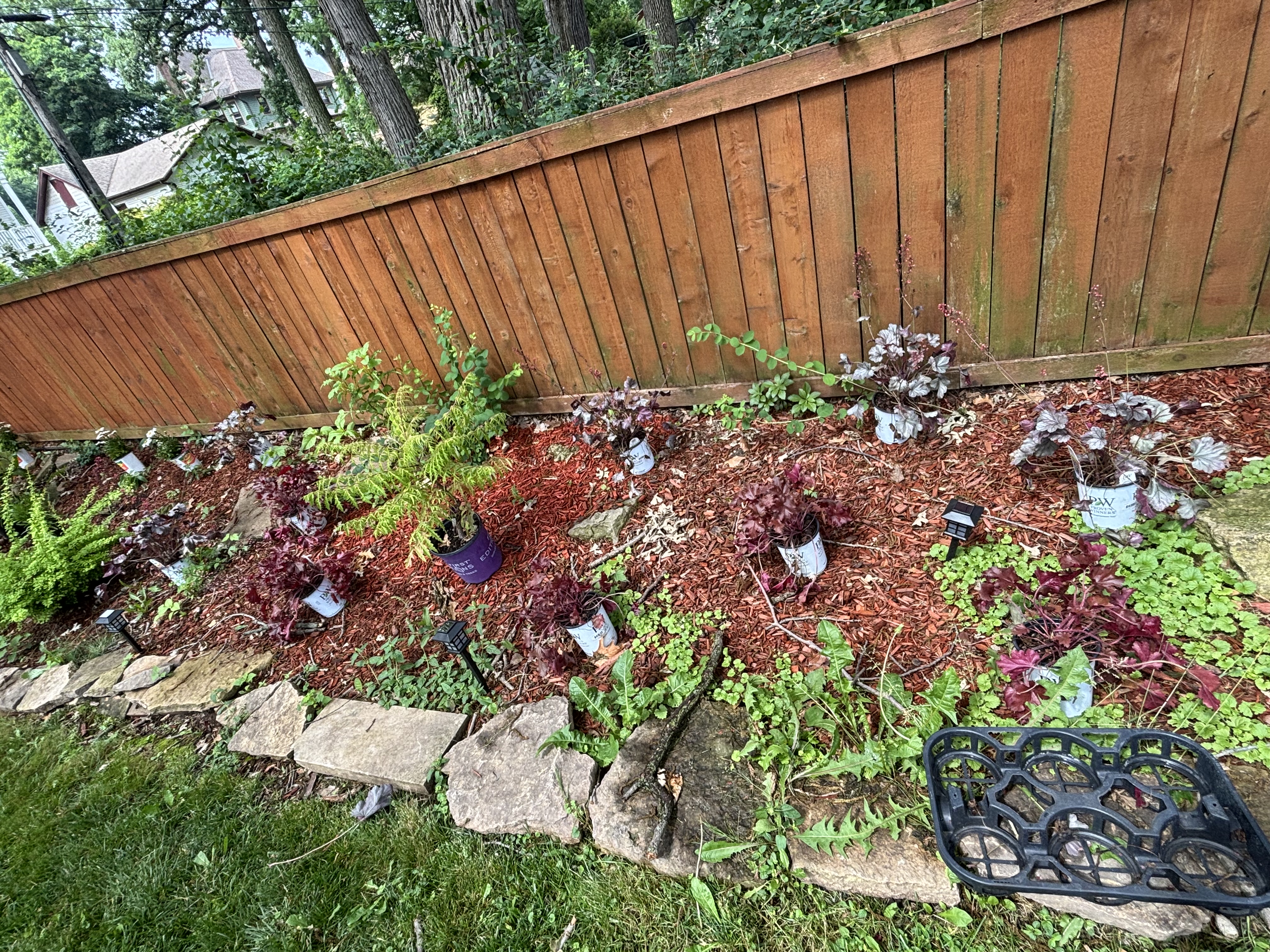
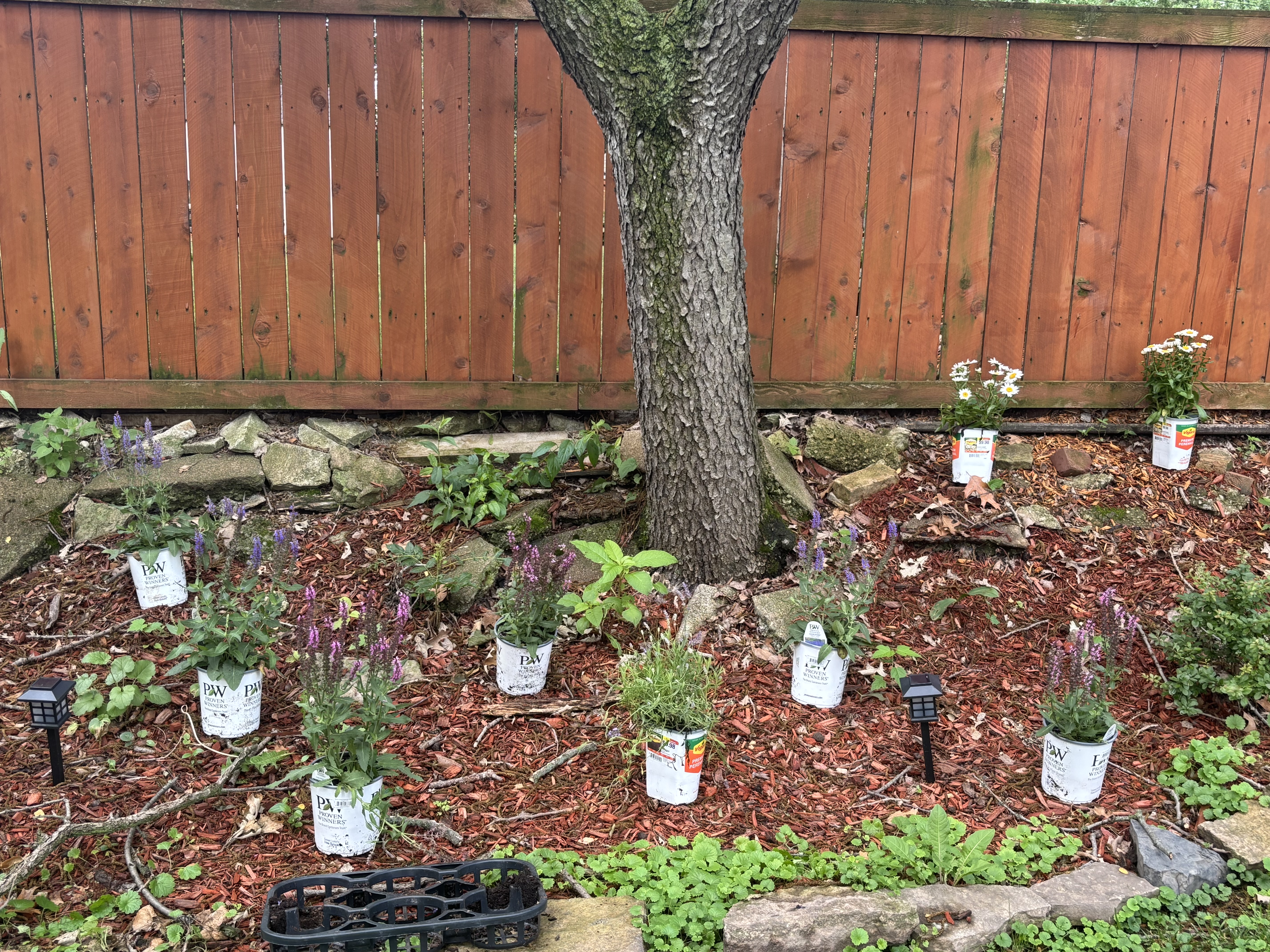
This took about two days of work including multiple trips with the homeowner to different stores. There was also an unseasonal heat advisory while I was there. It didn’t feel anywhere near as hot as it is in Louisiana, but I will admit, this Chicago heatwave did creep up on me and slow me down a pace.
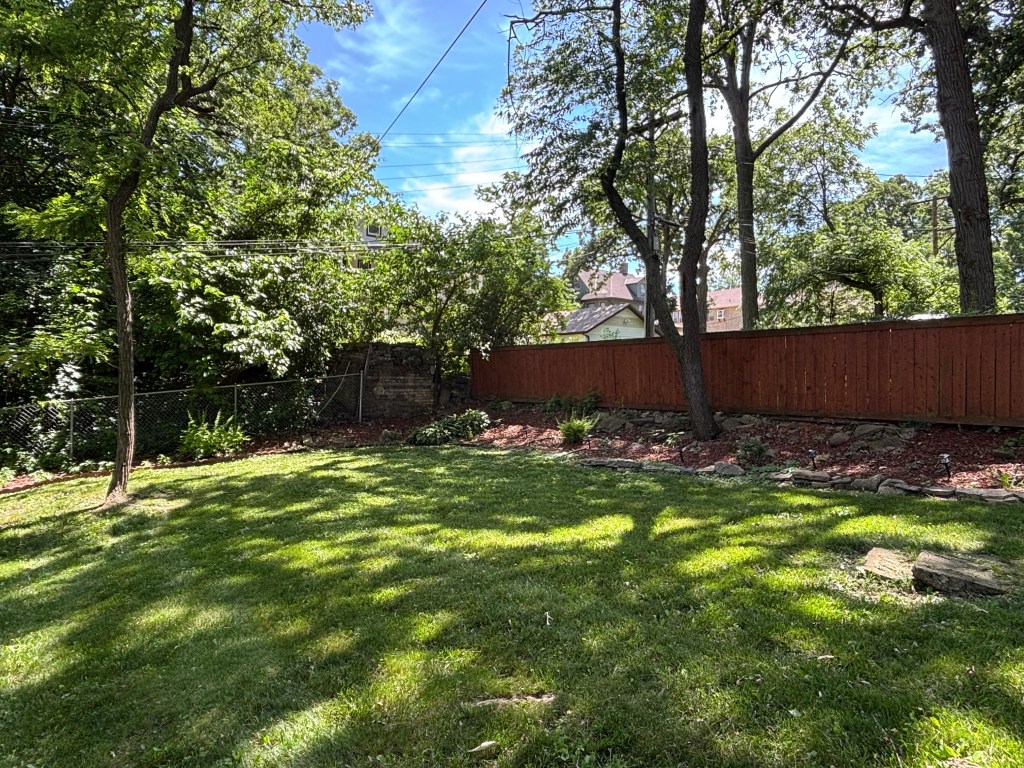
Her property butts up to a heavily wooded area that was overgrown into her property. I pulled the heavy vines wrapped around her chain-link fence, and hand weeded both inside the beds and along the flagstone/lawn border as I went. There was one particularly invasive weed growing alongside these beds that needed a lot of attention, but was also indicative of poor lawn health.
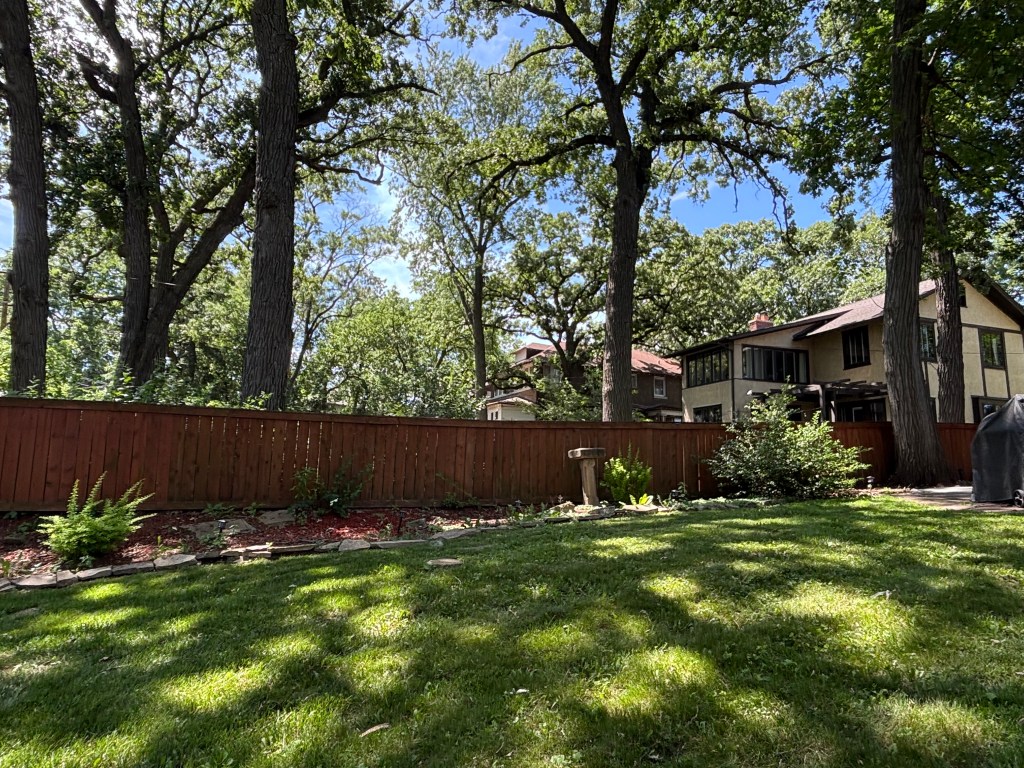
Final Look
Future Recommendations:
The current hose spigot was on a side of the house towards the front where no easy to source length of hose would reach. I suggested she get her plumber to add a spigot to the other side of the house and purchase a retractable hose reel that ran at least 100 ft in length so she wouldn’t have to trek too far down the hill to water the plants at the bottom.
Although the focus of this project was the ornamentals along the fence line, her lawn was also struggling: lots of bare patches and invasive weeds. We discussed that she should work with her lawn maintenance company to find an overseeding and fertilizing course of treatment over the next year. But I also suggested that she find a different lawn company than the one she was currently using because they were not trimming the majority of the weeds at the bottom of the hill. (They knew she wasn’t going down there and they were cutting corners and charging her for services half provided).
***
I’m excited to return to Chicago this spring to see how everything looks after the ground thaws. Hopefully, the plants bounce back and spread out, but if not, I’ll do some touch up work.
Over the past few years, there’s been a lot of dialogue around killing your lawn. Kill it and get rid of your mower, trimmer, and blower. Kill it and plant native species. Both are excellent reasons – they benefit the ecosystem by reducing fossil fuel use and noise pollution, and increase biodiversity.
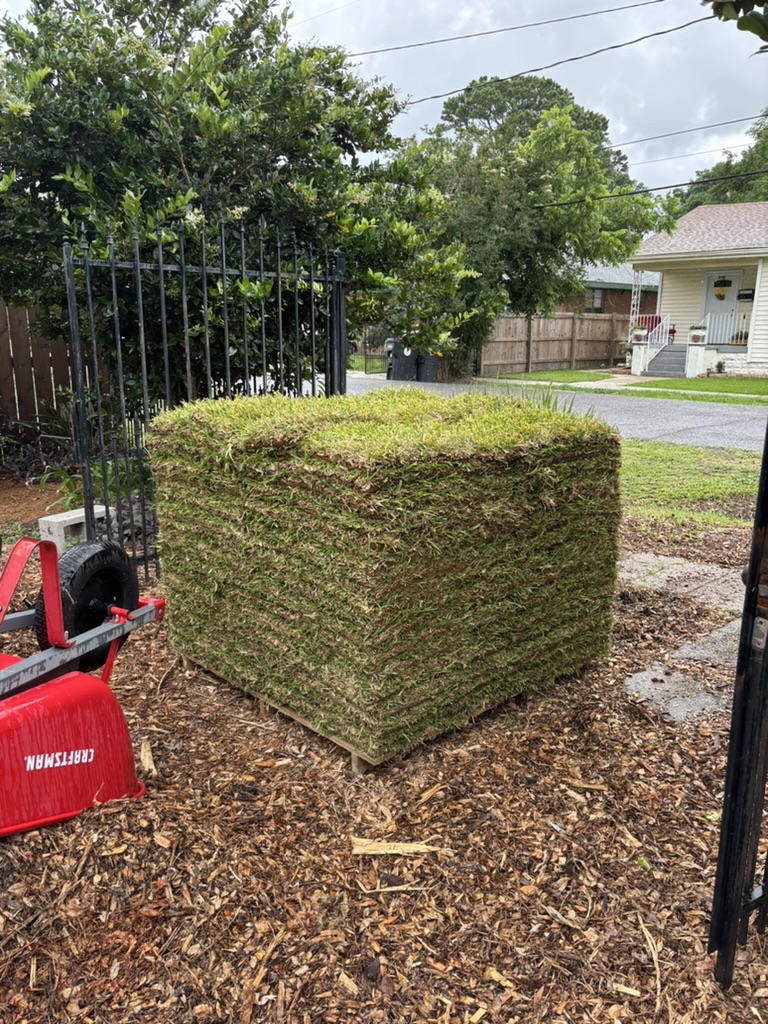
Yet, this past week, I installed a pallet of St. Augustine sod.
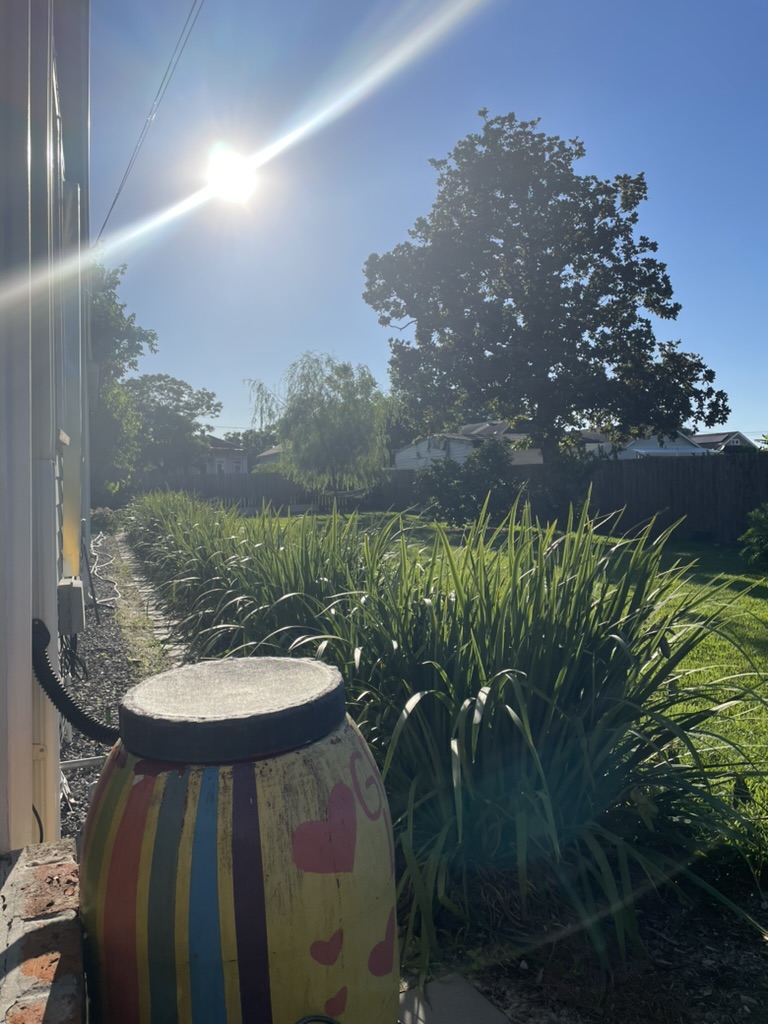
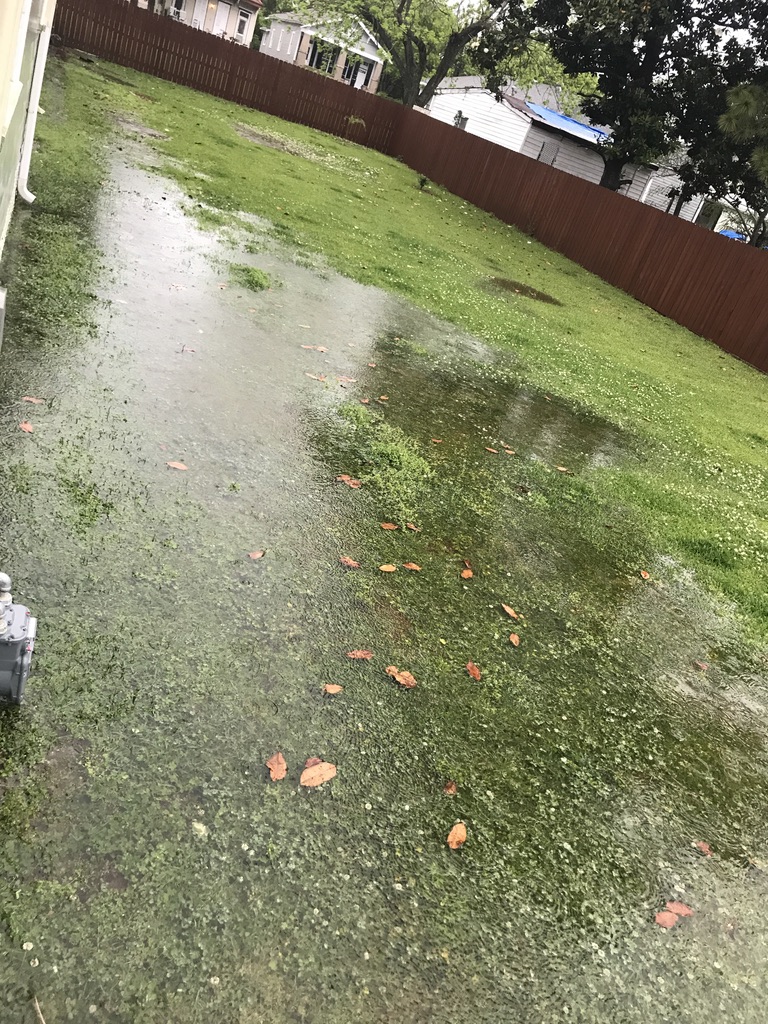
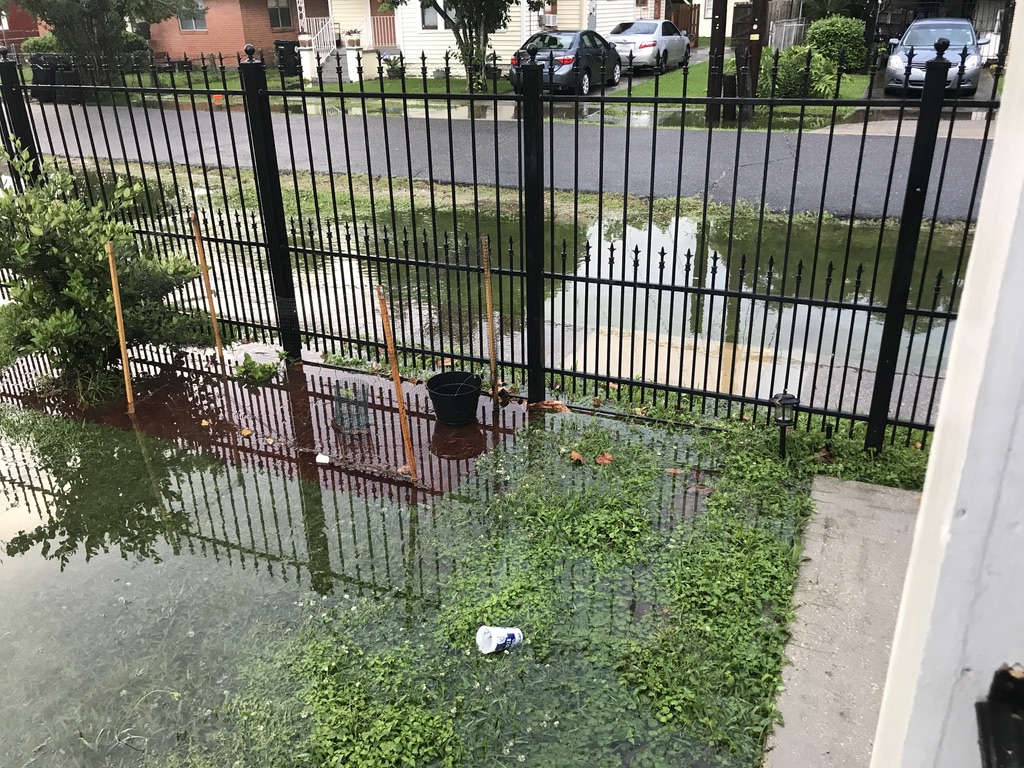
I have a huge lawn; my home sits on a double lot. Between the lawn and the swale (the green space between the sidewalk and the road that I’m also responsible for), there’s a lot of land to mow. But I’ve been gradually reducing the size of my lawn – planting trees, building out garden plots, and adding raised beds. I also built a rain garden and had a french drain installed along the length of my house, because when it rains, it storms, and floods.
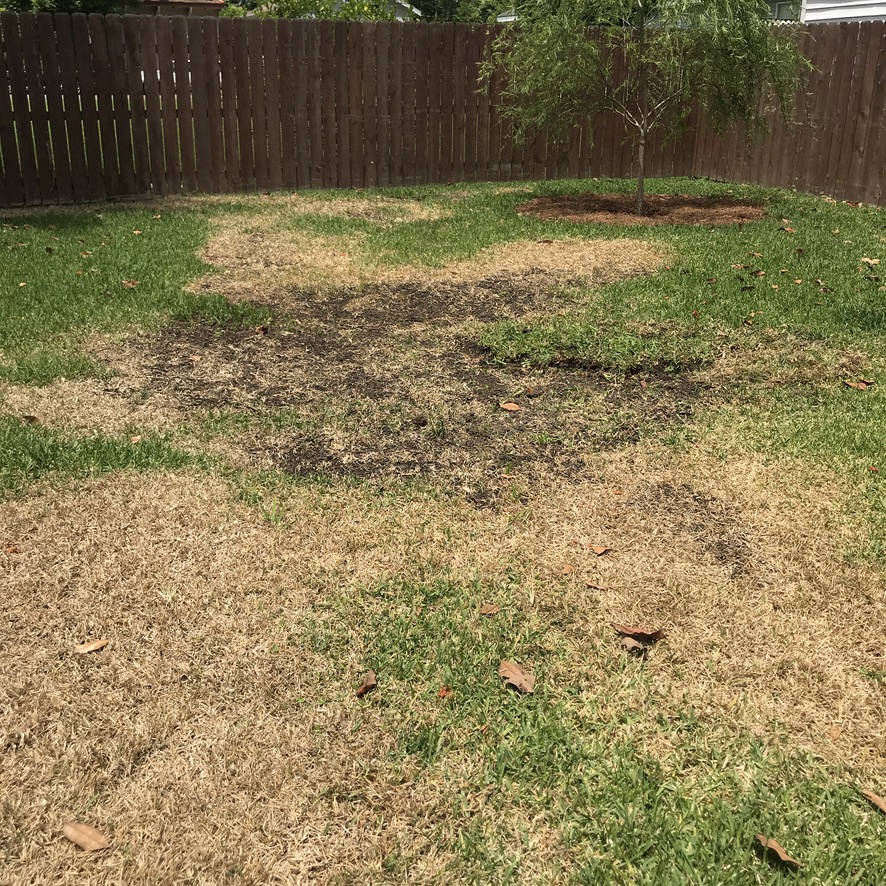
It’s also a lawn full of weeds. I didn’t notice at first because everything was green, but there were entire sections of the lawn that were nothing but weeds and the excessive rains only fueled their proliferation. I’ve used all types of selective herbicides (don’t judge me) and hand picked others, all in futile attempts to give the grass time to outcompete.
“Weeds” are nothing more than plants you didn’t intentionally place somewhere. Many are harmless and have some ecological value – attracting pollinators are providing food for birds. Others are invasive – choking out other plants and providing no ecological benefit – and should be controlled.
The thing that’s been trending lately is clover lawns. Clover attracts bees, it doesn’t require as much maintenance, it’s drought tolerant, etc. So I gave it a shot. I didn’t kill my lawn, but I heavily seeded all the bare spots and overseeded the lawn in general with white and crimson clover, as well as with dichondra. My hope was that it would fill in the spaces, outcompete some of the invasive weeds, and bring more bees to my garden overall.
When it was all said and done, I hated it.
First of all, I think the folks on social media who claim they love their clover lawns, are lying. Clover is great as part of your lawn, but as the singular element? Absolutely not. If there’s not enough sunlight it gets leggy, it falls over when it rains too hard or you walk on it, and it dies back easily and often leaving you with bare soil primed for some of the more vigorous and invasive weeds we have in Louisiana.
Flooding before french drainFlooding before rain gardenRain garden
This leads to two question: 1) why not let the regular, volunteer weeds just do their thing instead of trying to be in control? and 2) wasn’t the point of killing the lawn to reintroduce native species?
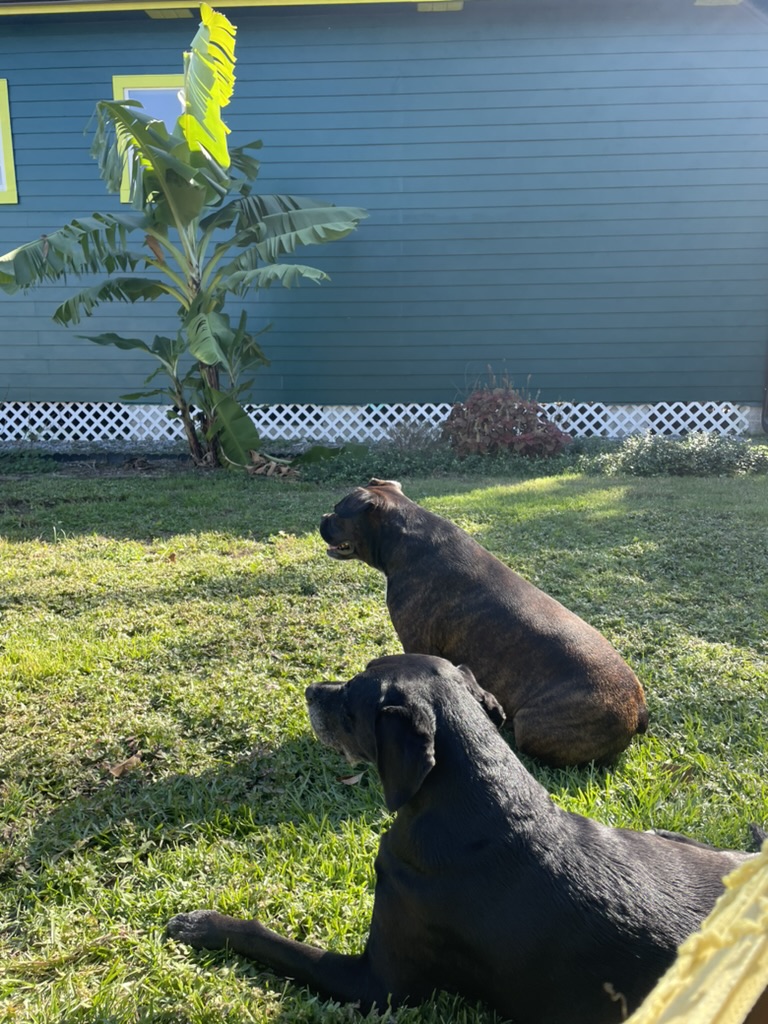
Most of the regular “weeds” in my area get really tall and grow faster than the grass. I have two dogs and there’s a colony of feral cats in the neighborhood. I do not enjoy easter egg hunting for animal poop. And if I don’t regularly locate it all, the dogs will eat the cat poop, they’ll step in their own poop and track it inside, and the fly population will be out of control. So if my original reasons for killing the lawn included having to mow less, then this doesn’t hold up – I’d still be out there with the string trimmer at least once a week.
On the other hand, intentionally planting native species in a yard this size is firstly, cost prohibitive. More importantly, it still doesn’t solve the poop problem as most native grasses and wildflowers are also tall. Louisiana doesn’t have many species of native ground cover that are commercially available (e.g. turkey tangle frogfruit), and the more available low-growing natives are still 5 – 6 inches in height.
But whether I leave the regular weeds or plant native species, the seasonality is always gonna whoop my ass. Most of these plants die back to the ground in between seasons rather than just going dormant. They come back up the next year, but in the interim I’m left with random balding patches of weakly rooted and thinning plants, or straight up bare soil. With clay-based soil and a cyclical flood/drought weather pattern, the clay goes through extreme expansion and contraction when it’s left exposed leading to erosion, mud pits, and sinking structures.
Burnt up & half dead lawn from early 2020
One summer we had a drought for the first half and endless storming the second half. By the end of the year, my cinderblock raised beds had shifted to the point that I had to rebuild them, and my arbor started leaning to one side where the cement footings on the right pillars sunk deeper, pulling the left ones up. Most recently, so much soil washed away in the back half of my yard that it exposed a buried cement pad I never knew was there (and didn’t want). The overall patchiness and lack of health throughout the lawn makes it a prime breeding ground for red ants, which is a nightmare for both me and the dogs.
Finished pathwayExhausted from installSod replacing weed patches
I didn’t kill the weeds, I just trimmed certain patches down to the dirt, raked up as many roots as I could, dug up soil when necessary to meet grade, and added some topsoil. I left the major sections of clover in my lawn where it plays nicely in between the St. Aug grass blades, but I pulled up much of the fast spreading seasonal weeds to give the grass space to breathe and spread. I’m not aiming for a perfect, weed-free, monocultural lawn, but I needed to find a better balance between how I actually use my yard and how I can support the ecosystem.
I’ve shrunk the overall size of my lawn by at least 40% in my decade of homeownership. Every year the trees get bigger, I expand my food plots, and add more native plants in garden beds. But the reality is, I will always want comfortable spaces in the yard to lounge and for the dogs to play. For those spaces, I’m sticking with the sod. When the turf grass is healthy, with fewer weeds, I don’t pull out the mower or trimmer as often because the grass doesn’t grow tall very quickly and it goes dormant for most of fall/winter. I use fewer pesticides as well.
“Kill your lawn” is a great rallying cry for individual homeowners to get behind for combatting climate change and ecocide. But it isn’t always as straightforward as pulling up the whole lawn and planting a native prairie (or another monocultural space via clover). As you contemplate what to do with your outdoor space, always be realistic with yourself about how you currently use the yard and how you hope to use the yard.
If you have small children or animals, or you do outdoor sports/activities you’re going to want to have some dedicated low growing areas, able to withstand high traffic, and maybe doesn’t attract stinging insects or snakes.
If you want to grow food you might build raised beds on top of the grass (which would kill it) or dig up the grass and plant rows in-ground with plenty of additional mulch.
If you want flowers and other ornamental plants, you might have dedicated garden beds that are contained to a certain location that can be expanded.
The point is, being considerate of the ecosystem and biodiversity doesn’t have to be all or nothing. Kill the lawn in sections based on your personal usage (as I’ve done) or, if you have the right financial and life circumstances, go for the prairie-like yard full of wildflowers and other native plants and marvel in the habitat you’ve created. Whatever you decide, make sure you create a space you can enjoy and not a space you create out of obligation. There’s no perfect way to respect the environment, and whatever you build, nature will eventually show up.





 Viridescent Spaces