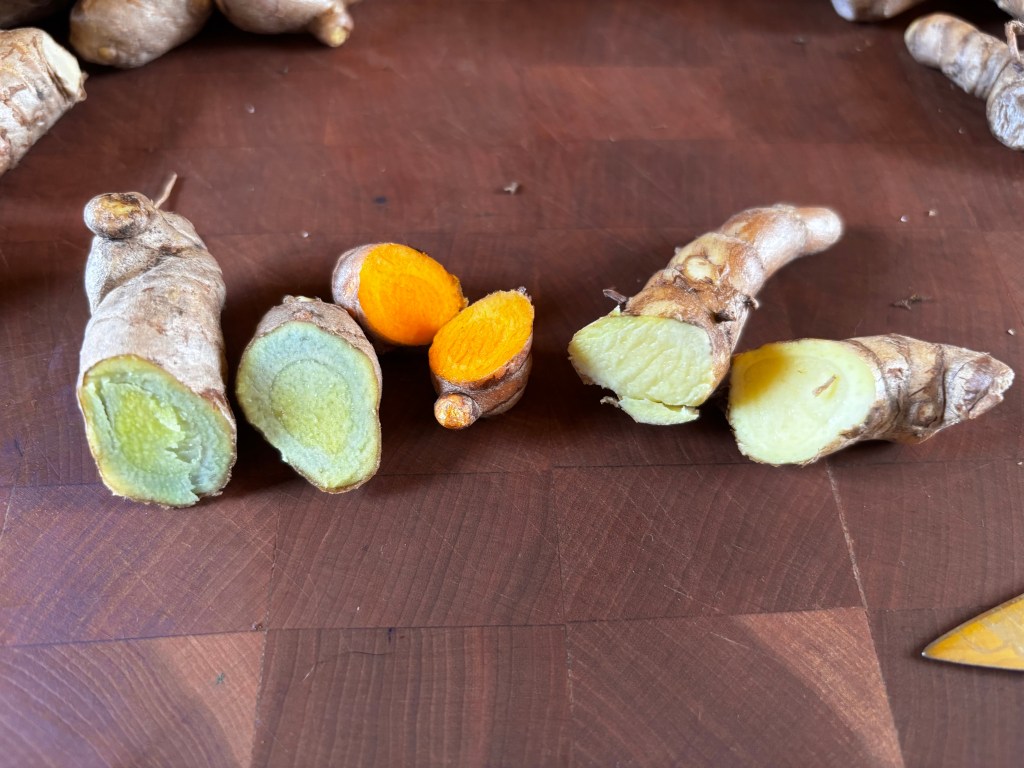
In 2021 my neighbor shared turmeric rhizomes from her own garden so I could plant them in mine. I did a quick internet search to understand their light (full morning sun/partial afternoon shade) and soil (well drained, lots of organic matter) needs and then planted them.
They took very little effort on my part and within one season had large lush foliage and beautiful, sweet smelling flowers. We had a category 4 hurricane (Ida) and the turmeric bed was unbothered, unlike my bananas. But, when I finally went to harvest the rhizomes, I realized I’d messed up somewhere: the flesh of the rhizomes were colorless.
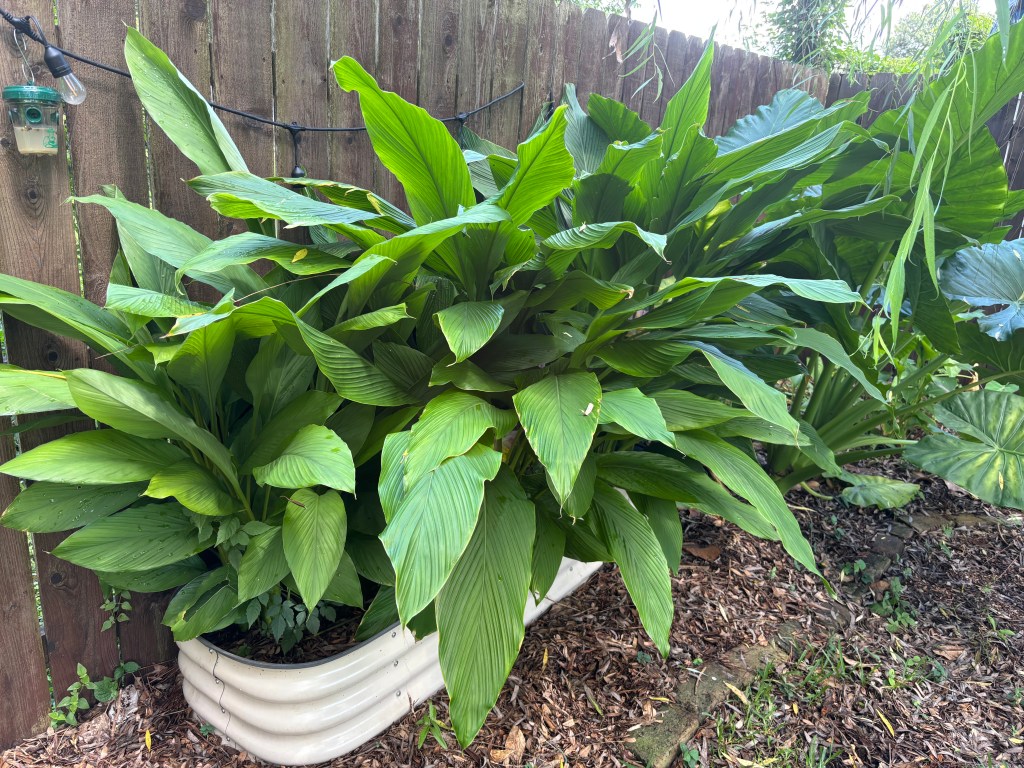
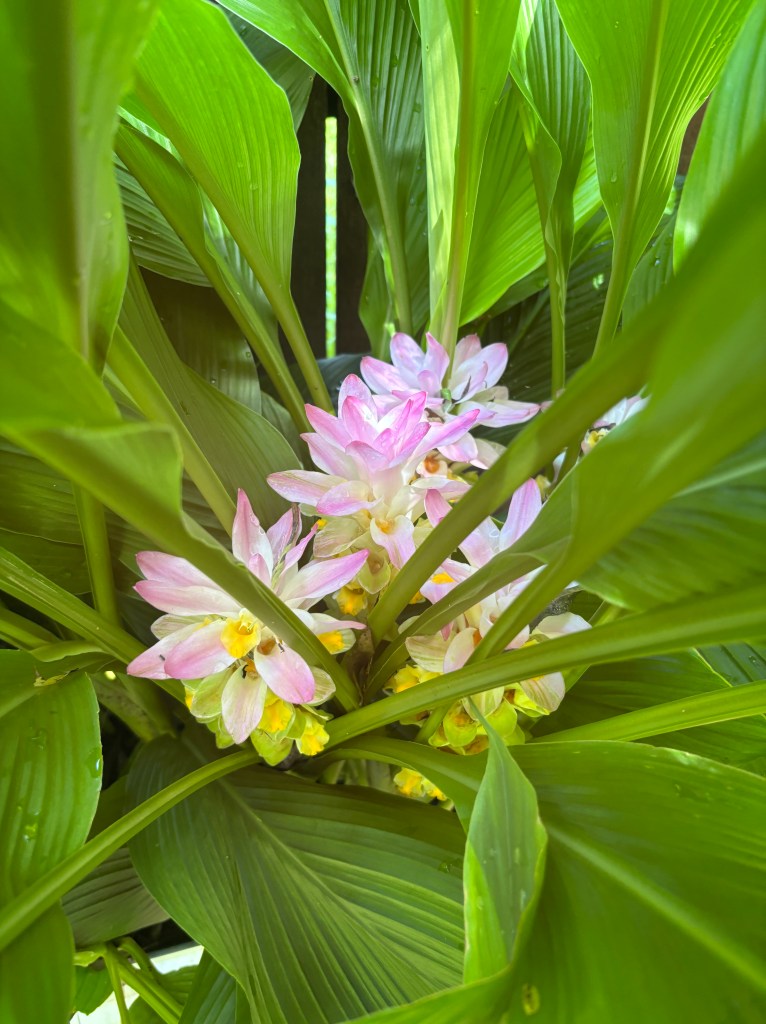
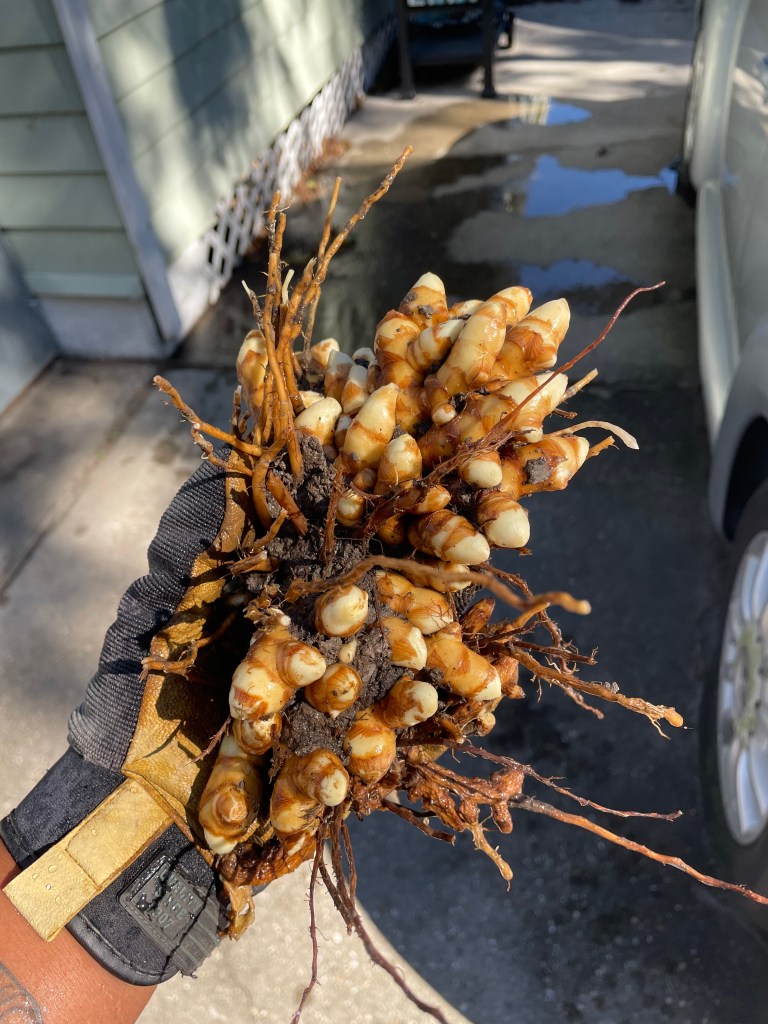
My first thought was that maybe turmeric was like hydrangeas where the color depended on the soil conditions. What I learned, was there are various colors of turmeric. I’d only ever seen the orange/deep yellow turmeric powder or rhizomes sold in stores, but I was growing white turmeric.
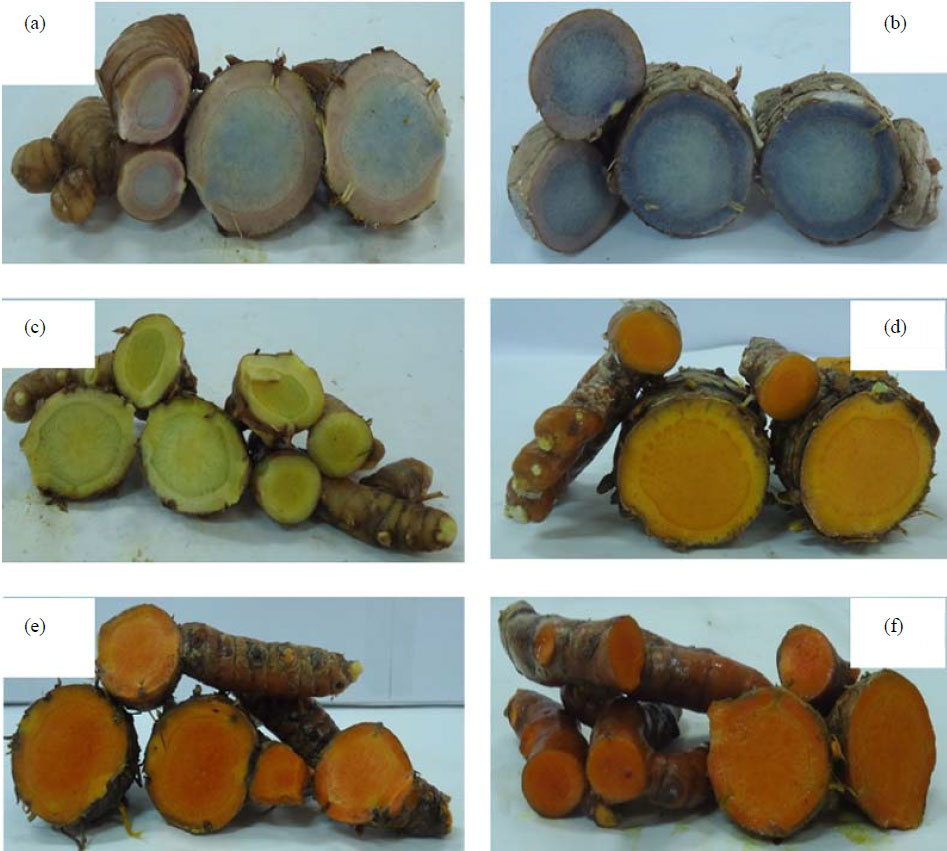
I guess I shouldn’t have been surprised. It was like finding out there were purple and white carrots. Modern agricultural markets value mono-cropping and create a narrative of what produce is singularly “supposed” to look like, image branding, to the exclusion of other natural variants. So we associate carrots with the color orange, and other colors become “rare,” even if in the case of carrots, their rarity was manufactured.
Turmeric obviously isn’t native to the US, and its mainstream popularity has primarily surged in the last fifteen years because of our obsession with “superfoods” and creation of wellness culture, largely rooted in capitalistic hyper-consumerism. Cafés sell golden milk lattes in attempts to create the newest health craze, stripped of its cultural identity as Indian Haldi Doodh and roots in Ayurvedic medicine. And much like the way we consume (and obsess over) chai, matcha, or açai, it’s probably of questionable quality.
What is Turmeric
Turmeric comes in several colors, and tends to be labeled by color, but it is a collection of several different species. Going back to basic biology, maybe you remember the ranking system for naming flora and fauna: kingdom, phylum, class, order, family, genus, species
Focusing on the last three, turmerics belong to the Family of gingers (zingiberacea) and the Genus of curcuma (hence discussions of curcumin content). But there are a variety of species, with different color variants, and different biochemical properties.
- Curcuma longa or C. longa = the orange variant we’re most familiar with
- Curcuma zedoaria or C. zedoaria = white turmeric
These are the two we have most access to the in the US, however “blue” turmeric has been creeping onto the scene as the newest most exclusive species.
Blue Turmeric
In early 2023 when I was browsing Baker Creek Heirloom Seeds website, their live plant options included “blue” turmeric for the first time, along with orange turmeric. I bought both to round out what I thought was the totality of turmeric varieties, along with ginger and galangal rhizomes.
When I harvested in early 2025 before we had our once in a century snowstorm I only pulled up orange turmeric; I figured the blue plants didn’t make it. But during this year’s harvest, one of the rhizomes broke off and revealed a bright baby blue flesh!
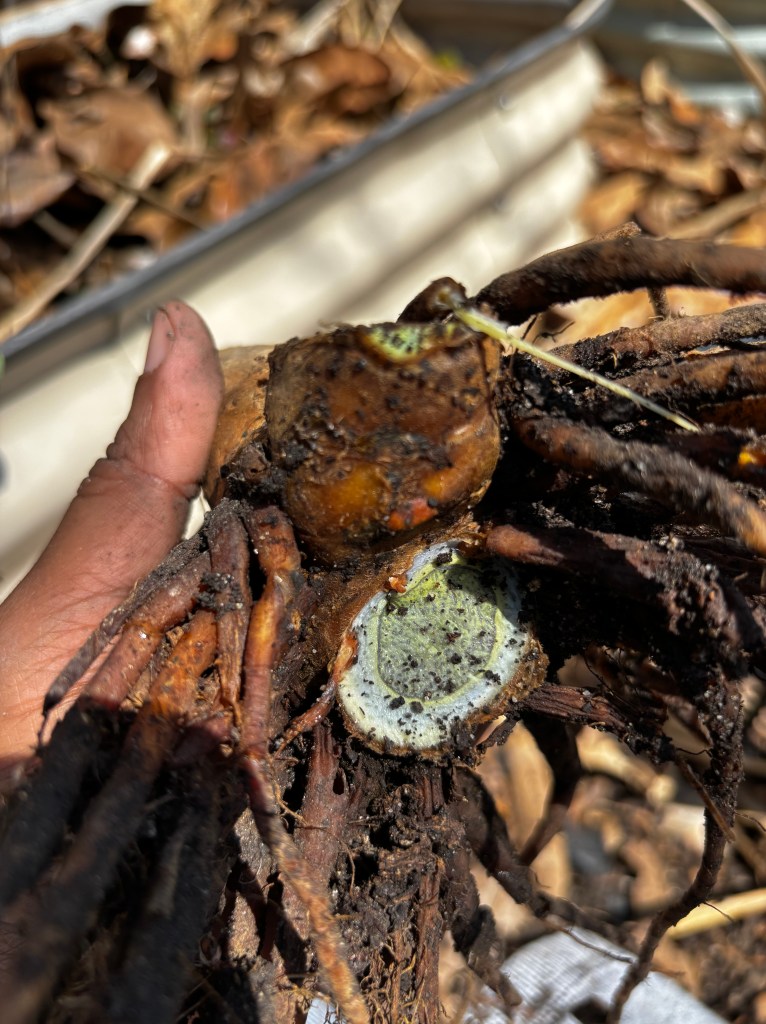
The first thing I noticed after the color was the smell. Orange turmeric smells warm, earthy, and peppery while white turmeric largely has no scent. Blue turmeric smelled astringent but a bit flowery as well.
The flavor took you on a journey: first lightly floral-pine (like rosemary), then a strong menthol-medicinal flavor (like a ricola cough drop), then a pronounced bitterness. When I steeped it in hot water, the flavor really smoothed out and was pleasant. It still has a slight numbing effect in the mouth but it was calming rather than off-putting.
I wanted to know whether there were actual differences between turmerics or if they were just color variants but largely the same. I suspected they weren’t given how drastically different they tasted. Yet, trying to find information on “blue” turmeric was difficult.
Internet searches primarily focused on how rare blue turmeric is, that it’s principally used for medicinal purposes, or it redirected to articles on orange turmeric. But a couple articles produced in India gave a name: Curcuma caesia. They described C. caesia as a dark hued rhizome, and said it was also known as black turmeric. The pictures didn’t look like what I had – my ‘blue’ turmeric was light in color, almost a bit green. Once again I wondered if it was about different growing conditions since it’s native to southeast Asia.
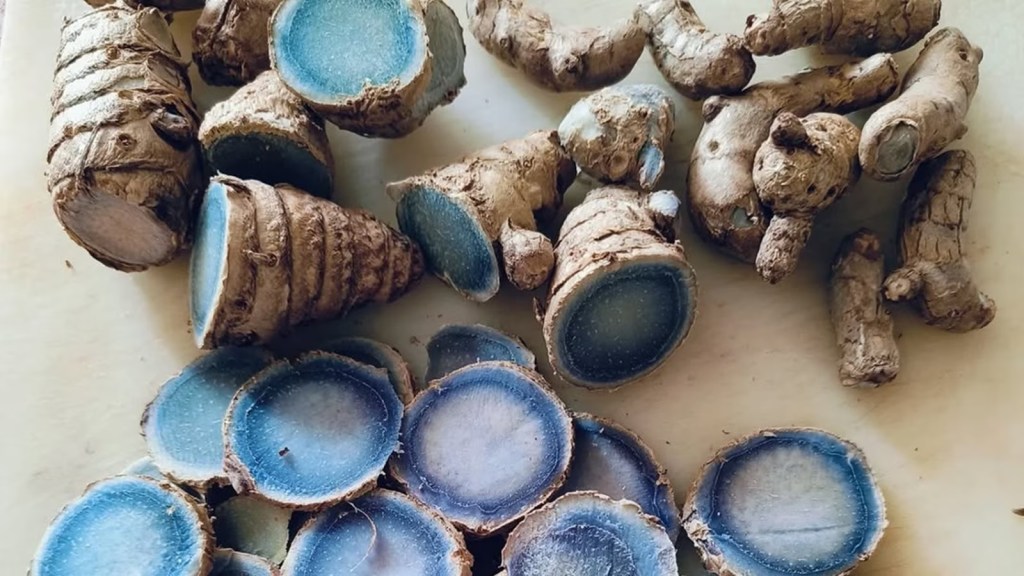
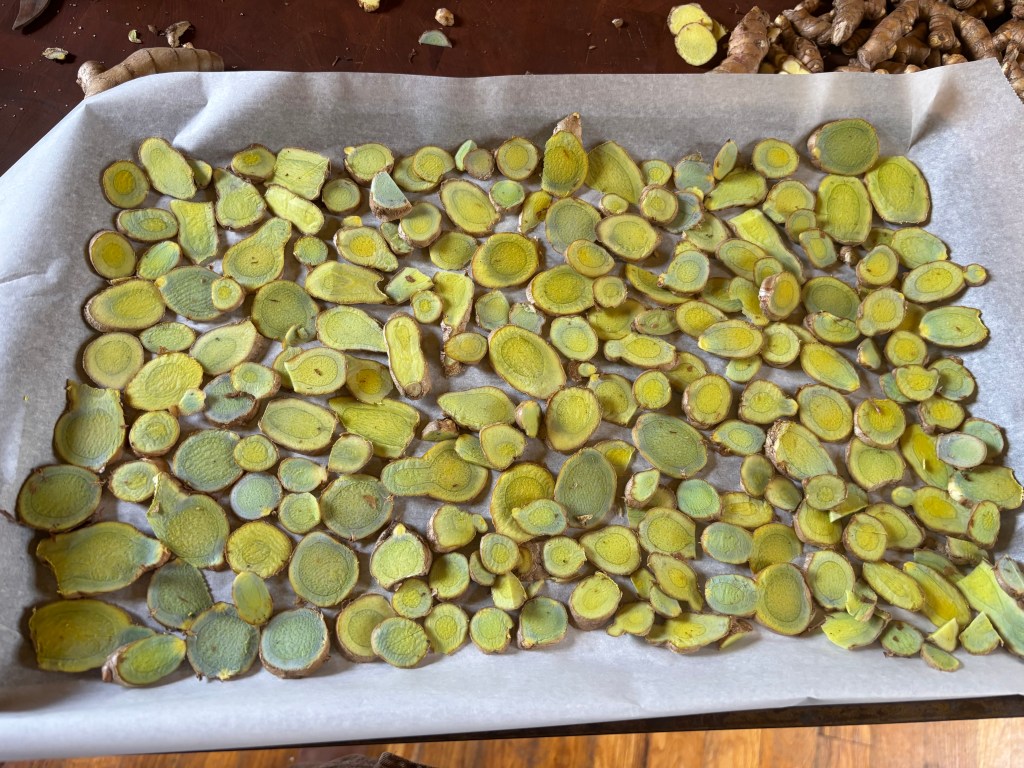
I went back to Baker Creek’s website to see if they could verify the species of the blue turmeric they’d sold me, but they weren’t selling it anymore and my emails with the receipt had no botanical name – it was just labeled “blue.”
Eventually I searched “blue v. black turmeric” to see if I could find anything else. And I did! An article called The Unique Blue Curcumin that discussed how to differentiate between Curcuma caesia (blue-black turmeric) and Curcuma aeruginosa (blue turmeric), given how similarly they look.
CURCUMA AERUGINOSA
When I searched this botanical name, an entire world of academic literature popped up about not only this species of turmeric but several others I’d never heard of before. I finally got an image of blue turmeric that more closely resembled what I had, and got more answers than I had questions about the differences between curcuma species in color, medicinal properties, biochemical components, and essential oil compounds.
Now for the Nerdy – Health Benefits
Turmerics or curcumas, are known for their curcumin content. Curcumin is well known for its antioxidant and anti-inflammatory properties. Oxidative stress and inflammation are key contributors to several chronic illnesses including: Alzheimer’s disease, multiple sclerosis, cardiovascular disease, metabolic syndrome, cancer, respiratory issues, arthritis, psoriasis, diabetes, obesity, depression, and fatigue, among others. Curcuminoids also help reduce LDL and non-HDL cholesterol, triglycerides, and total cholesterol while raising HDL (good) cholesterol.
C. longa has one of the highest curcumin concentrations of all turmerics, and has more antioxidant properties compared to C. zedoaria and C. aeruginosa. HOWEVER, curcumin is not very bioavailable, meaning, your body can’t utilize it before it’s metabolized. If you ever wondered why you hear people suggest adding black pepper to your turmeric drinks or dishes, it’s because piperine, a component in black pepper, increases biovailability of curcumin by 2000%
While C. zedoaria has less curcumin than C. longa, it also has tetrahydrocurcumin, a derivative of curcumin, that is more stable and bioavailable than regular curcumin (I couldn’t access a non-paywalled version of this article). For this reason, it tends to be used more in Traditional Chinese Medicine. My own acupuncturist has made me a few of medicinal herbal blends using white turmeric, and he discusses its benefits frequently.
Both C. aeruginosa and C. caesia are even lower in curcumin, but they have other unique medicinal properties, and different properties from each other despite looking very similar. In “Essential oil composition of eight starchy Curcuma species” there’s a chart that lists the major and unique compounds of various curcuma species.
C. caesia has a significant concentration of 1,8 Cineole, camphor, and ar-curcumene. These three compounds are not only being eyed by pharmaceutical companies and flavoring industries, but they are associated with analgesic, antimicrobial, anti-inflammatory, insecticidal, and anticancer properties.
C. aeruginosa has a significant concentration of curcumenol and beta-pinene. Curcumenol has analgesic properties, aka pain relieving properties. There’s also a bit of literature to suggest that curcumenol is beneficial to preventing the progression of triple negative breast cancer as well as managing lower back pain from disc degeneration and mitigating inflammation from osteoarthritis. Beta-pinene (along with alpha-pinene) has demonstrated benefits including “antibiotic resistance modulation, anticoagulant, antitumor, antimicrobial, antimalarial, antioxidant, anti-inflammatory, anti-Leishmania, and analgesic effects.”
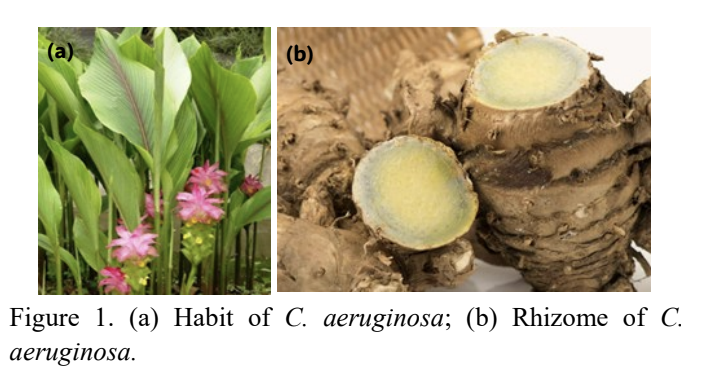
This other article gets into more details about the antimicrobial, antifungal, anitoxidant, anticancer, and antiandrogenic benefits of C. aeruginosa if you’re interested. It’s still in scientific jargon, but with far more plain language than the rest.
I can’t assess the strength of any of these academic articles or whether the journals they’re published in are high quality, or predatory – this simply isn’t my area of expertise. But I think it’s promising that so many scientists across the world are looking into the health benefits of these plants. There’s strong potential for them to have a wide range of applications – nothing curative – but a pathway for prevention and better quality of life.
 Viridescent Spaces