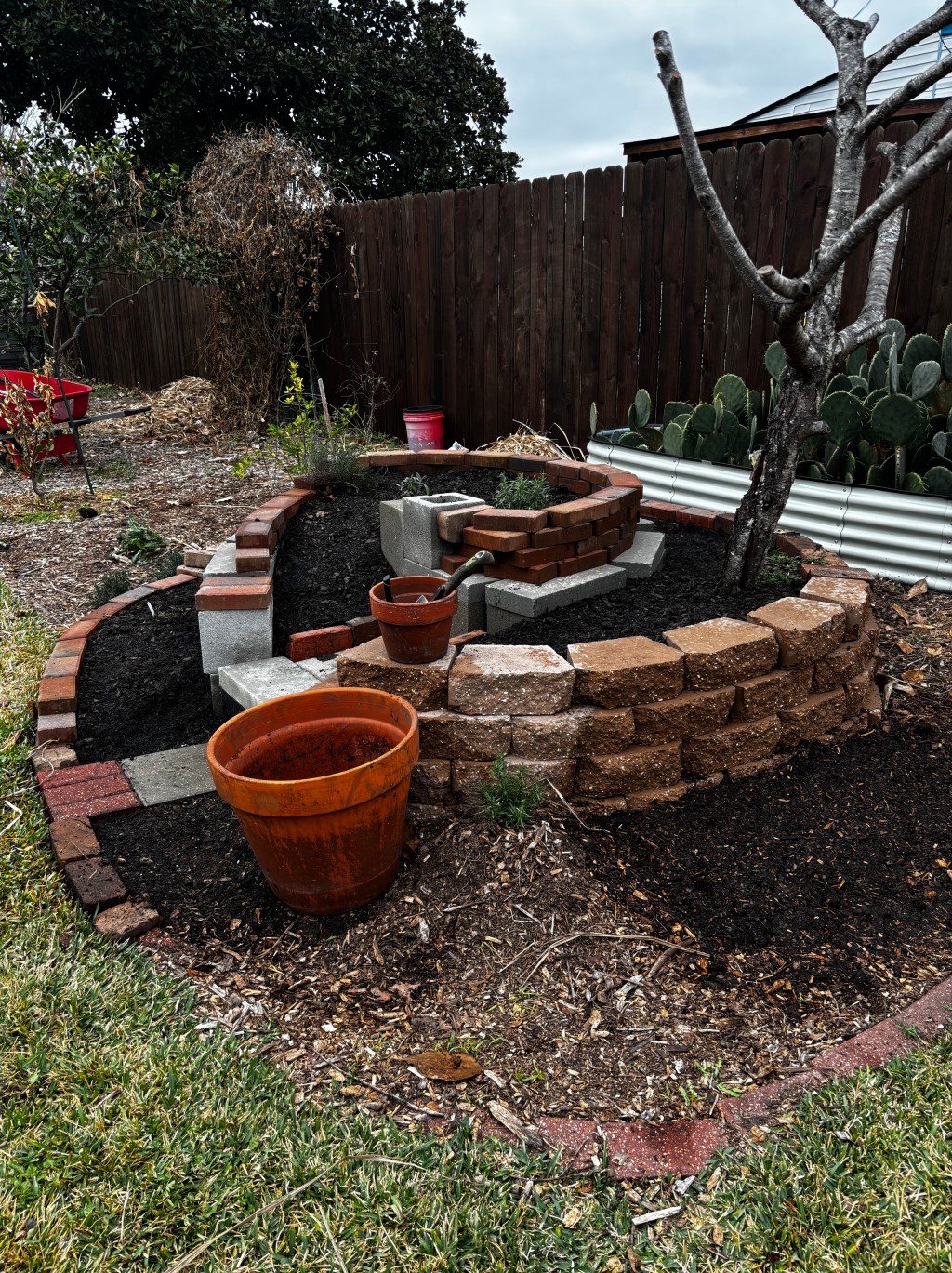
Last month I was researching accessible entry points into permaculture (because I find it a bit intimidating) and I stumbled across a presentation that highlighted herb spirals as a foodscaping design feature.
An herb spiral is a circular structure that maximizes a relatively small spatial area by building vertically in a gradual winding ramp up to the center of the circle. Beyond the spatial benefits, the vertical spiral design creates multiple microclimates that create more growing ideal conditions for a variety of herbs within that space than if it were a flat planting area.
The south-westerly side of the spiral will receive more full sun, while the north-easterly side receives more shade to partial shade. Also, plants at the top of the spiral are usually the more drought-tolerant, while more moisture loving plants get placed at the bottom. Having more height at the center of the spiral helps to create the various conditions, especially the shade and potential windbreaks.
Some herb spirals feature a pond or a small swale at the bottom to capture excess water and provide habitat for amphibians, lizards, and aquatic plants, which adds to the ecosystem. But that seemed like a mosquito nightmare, not to mention whatever my dogs would decide to do with it
Getting Started
An herb spiral should ideally be located within ten feet of your house. The idea is to make gardening convenient so you actually utilize the culinary herbs your planting and can quickly run in and out of the house to gather herbs while cooking.
You can use an array of different materials to build an herb spiral, but most commonly bricks or stone are used. If you care deeply about the aesthetics, then sourcing a consistent material for the entire spiral might be important. Permaculture principles suggest using the materials you have around the yard, including logs and other recycled materials you have on hand. Some examples:
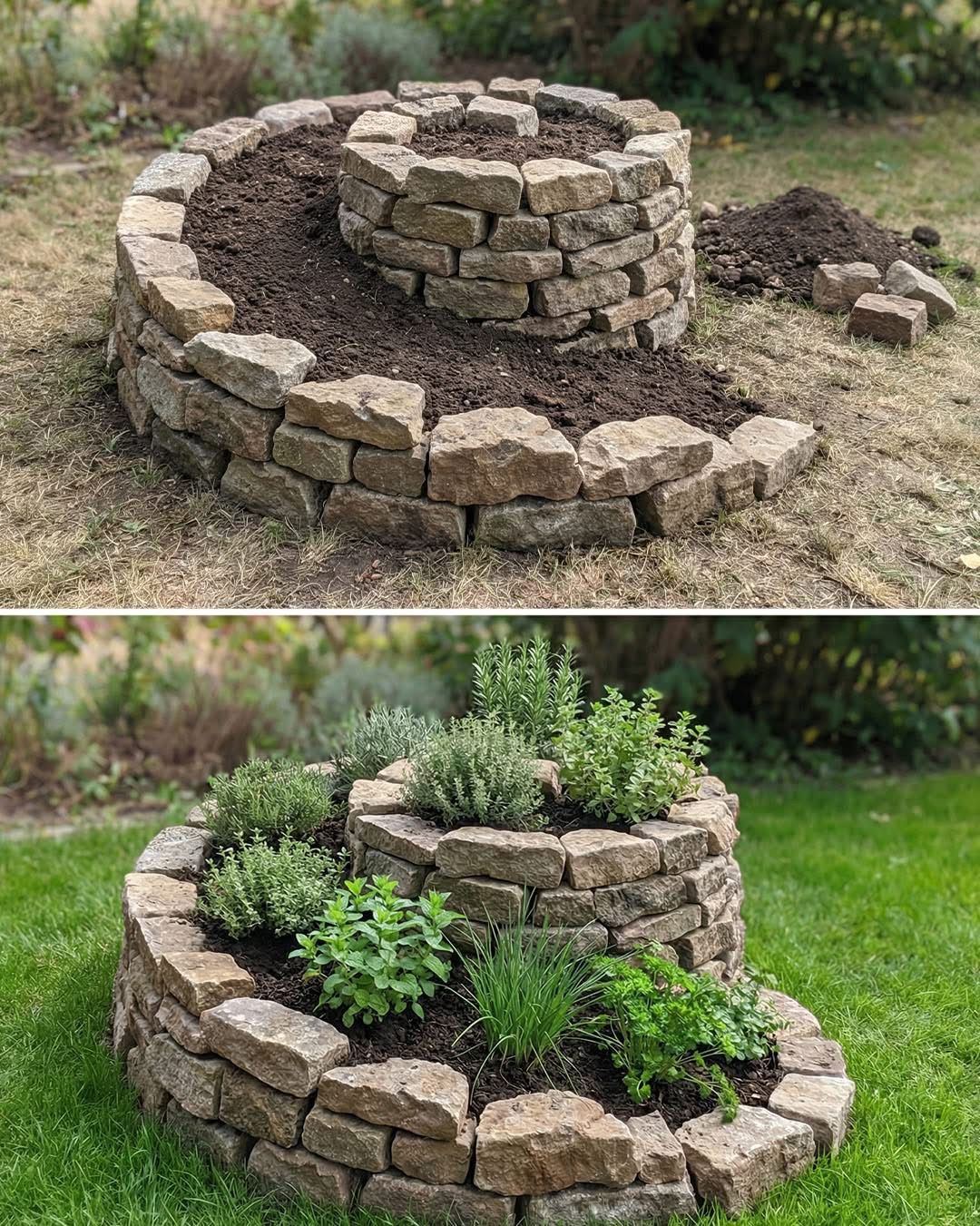
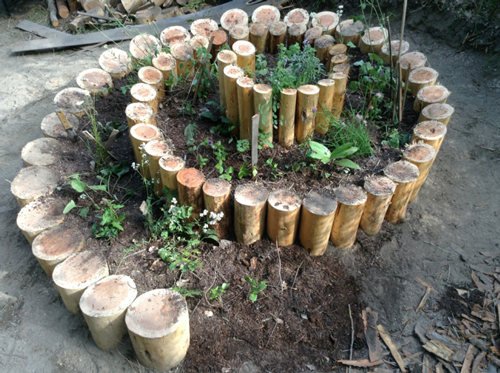
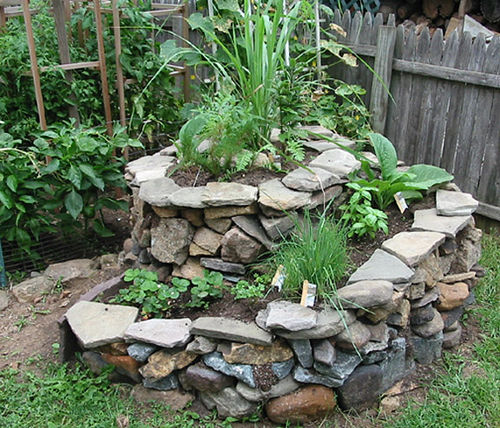
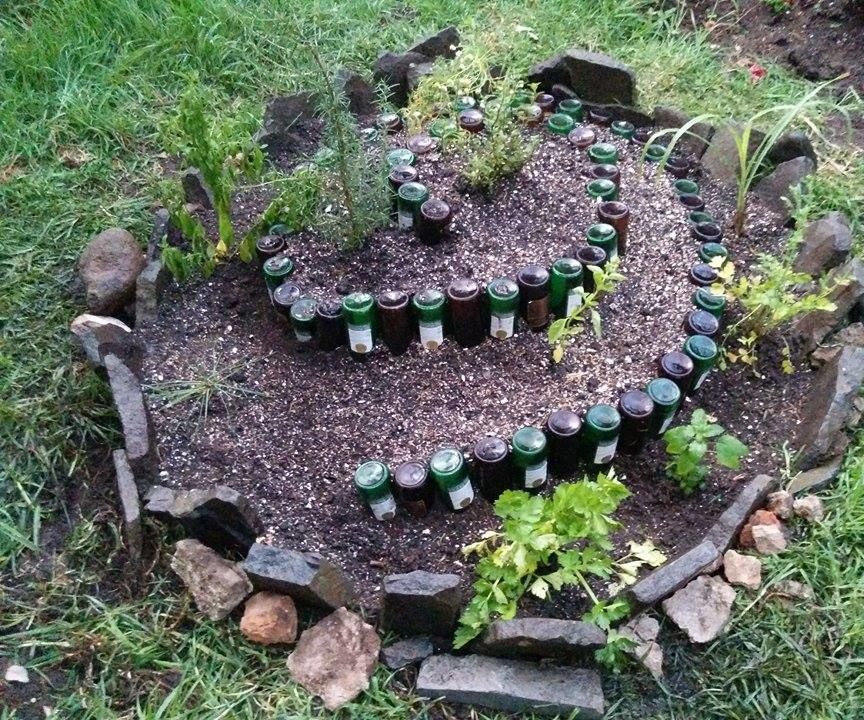
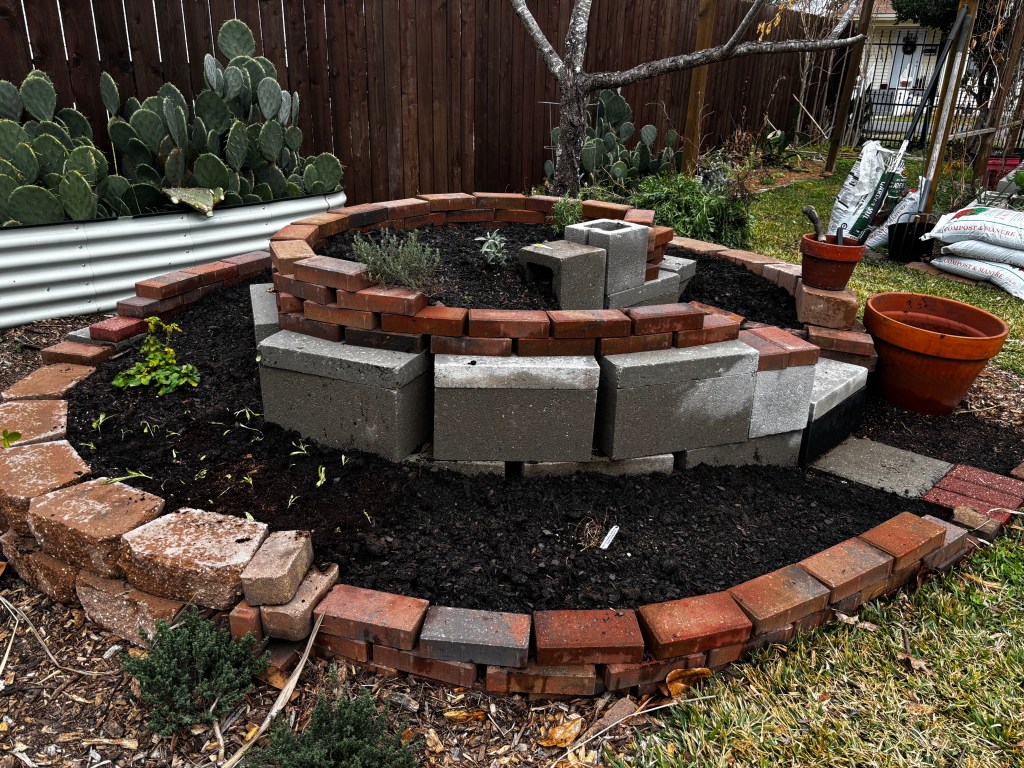
I already had bricks I got for free during COVID lockdown, when everyone decided to redo their homes. One acquaintance knocked their chimney down and another friend of a friend pulled up all their sidewalk pavers, neither wanted to pay for brick disposal, so that was all free. I did have to buy more bricks ($.68 ea.) and I opted to get SOME retention wall stones (~$2.50 ea) because they were pretty.
The cost of an herb spiral depends primarily on how big you make it as well as how much material you have to buy to build the structure and the type of material you choose. It can be relatively inexpensive if you build small and use materials on hand, leaving you the cost of soil. But it can quickly balloon, especially if you want uniformity and size.
How-To
- Choose a site that’s relatively flat that gets full sunlight. Prepare the site by working the top layer of soil to create as level a surface as possible. I rushed through this step and regretted it later when it came time to stack bricks — DON’T BE LIKE ME! Do it right the first time.
- Create a design and do a rough layout with one row of your material (bricks). My spiral is more oval-shaped than round because that was the space I had. I imagine you could also do a more squared off spiral with sharp corners at the turns, but it may require more materials than if you did rounded corners.
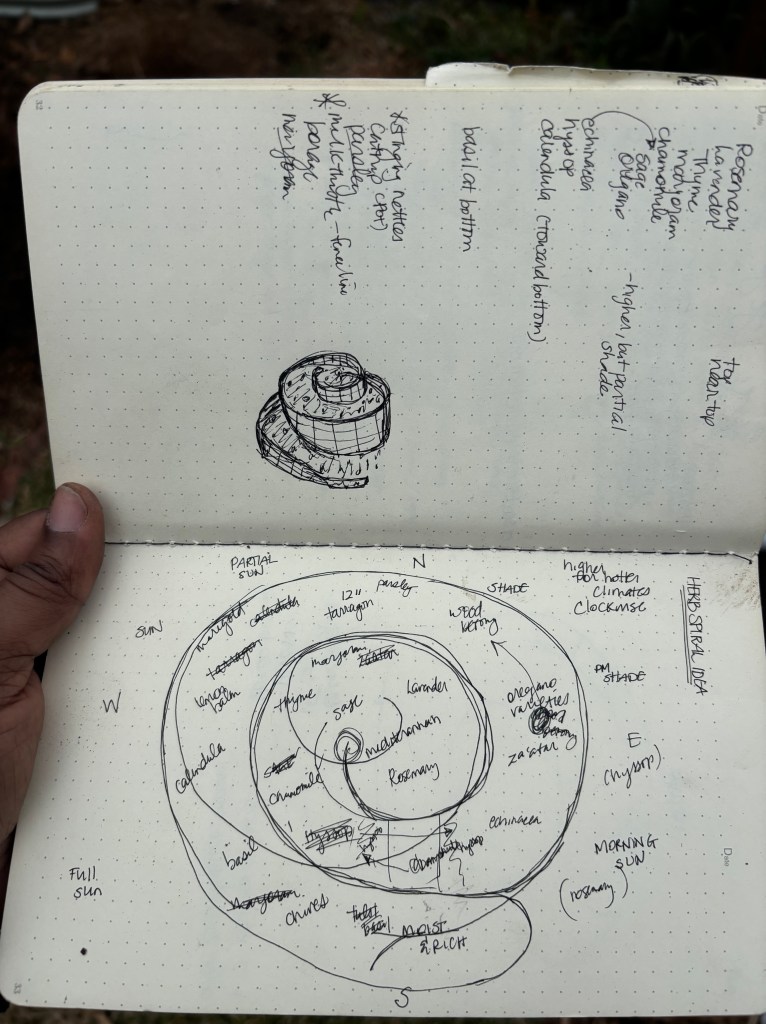
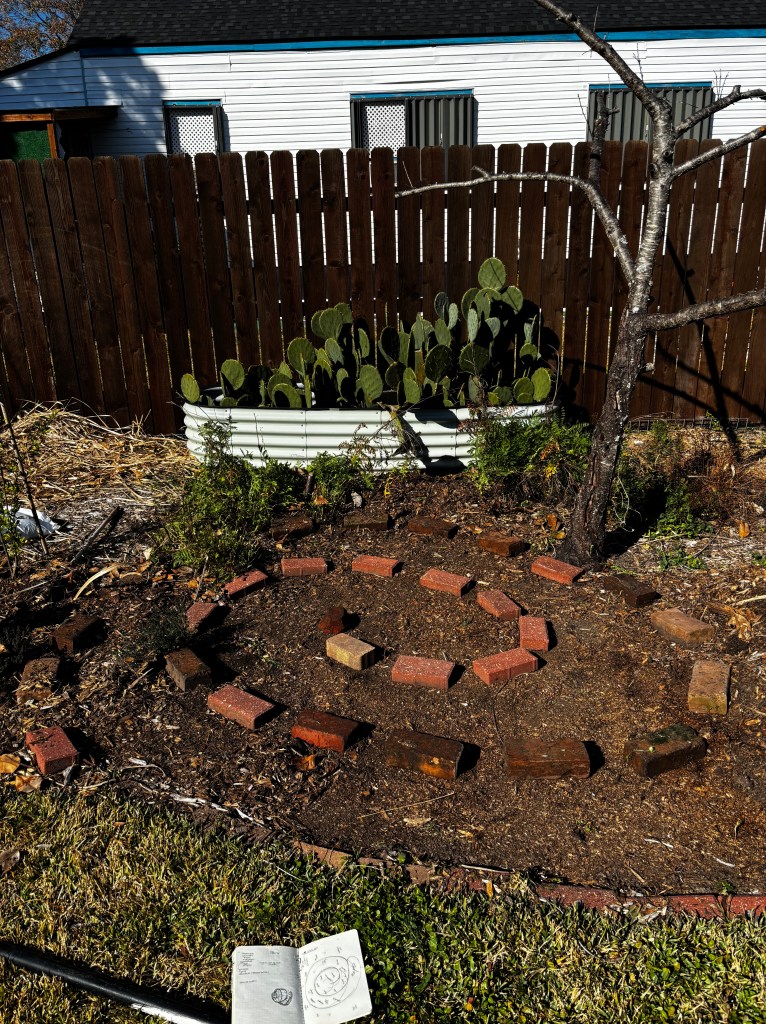
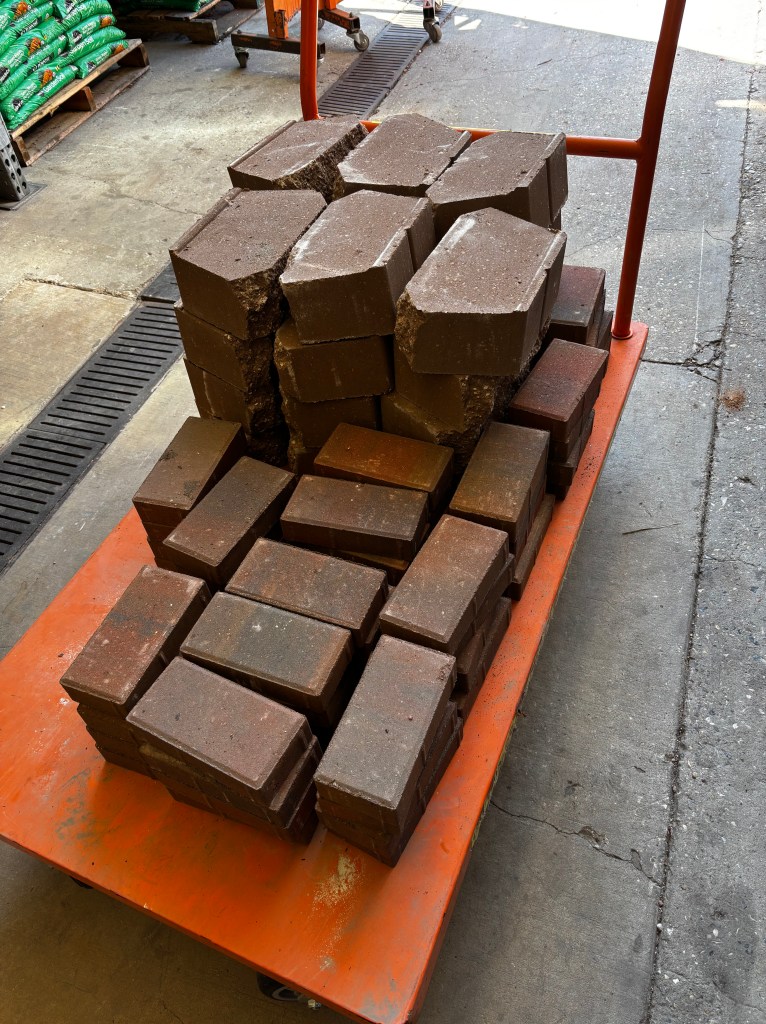
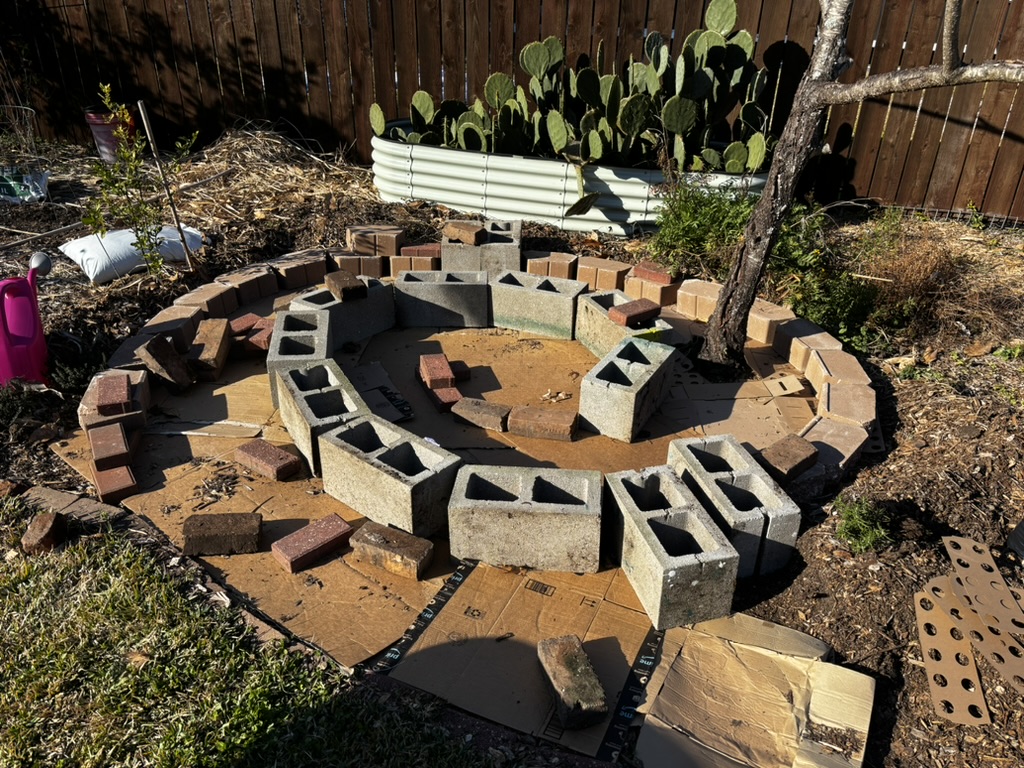
- Place a weed barrier down. Some people like fabric weed barrier sold at stores, but it doesn’t really work and it eventually becomes a nuisance because it will falls apart and leave little shreds all over the place. I used leftover cardboard from various package deliveries. It works the same but breaks down into the soil like mulch.
- As a general rule, the total diameter of the spiral shouldn’t be more than 5-6 ft, and the height no more than 3 ft. so you can reach all the herbs without hassle. I made mine larger but added a step using stacked pavestones I had lying around to get in
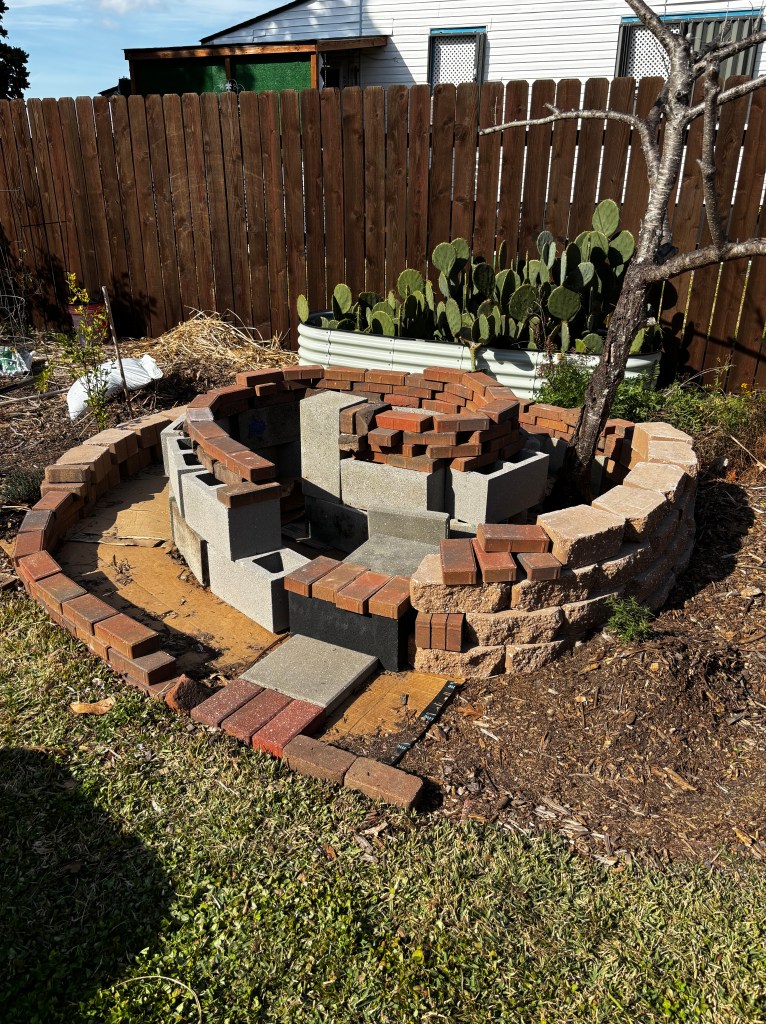
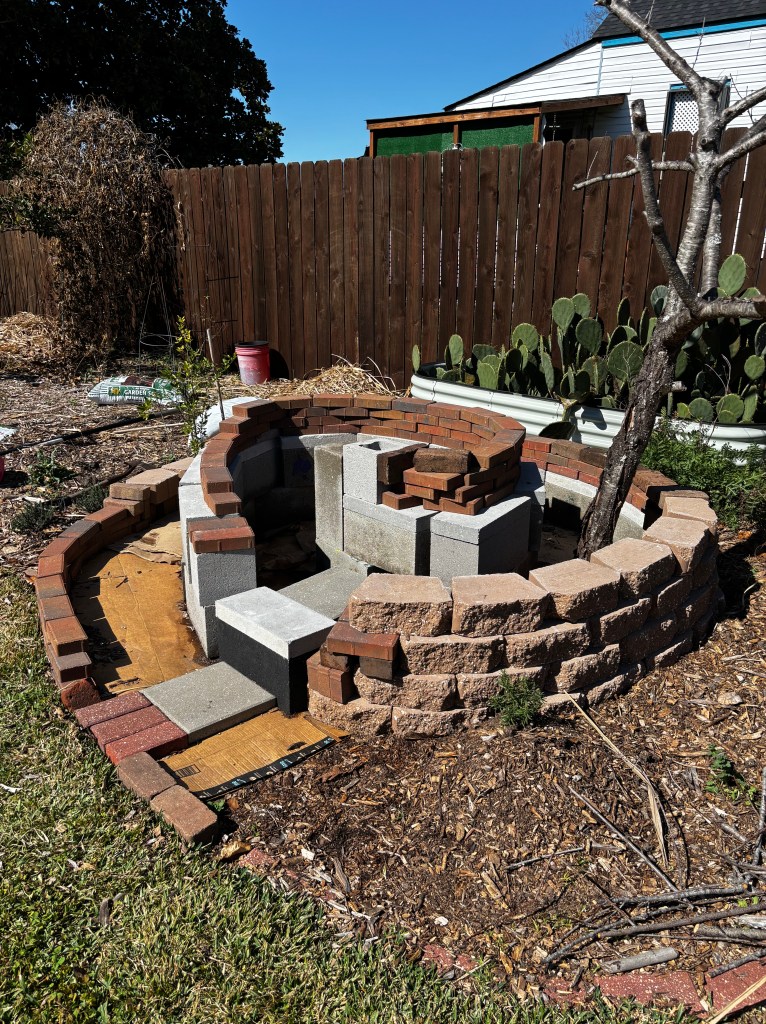
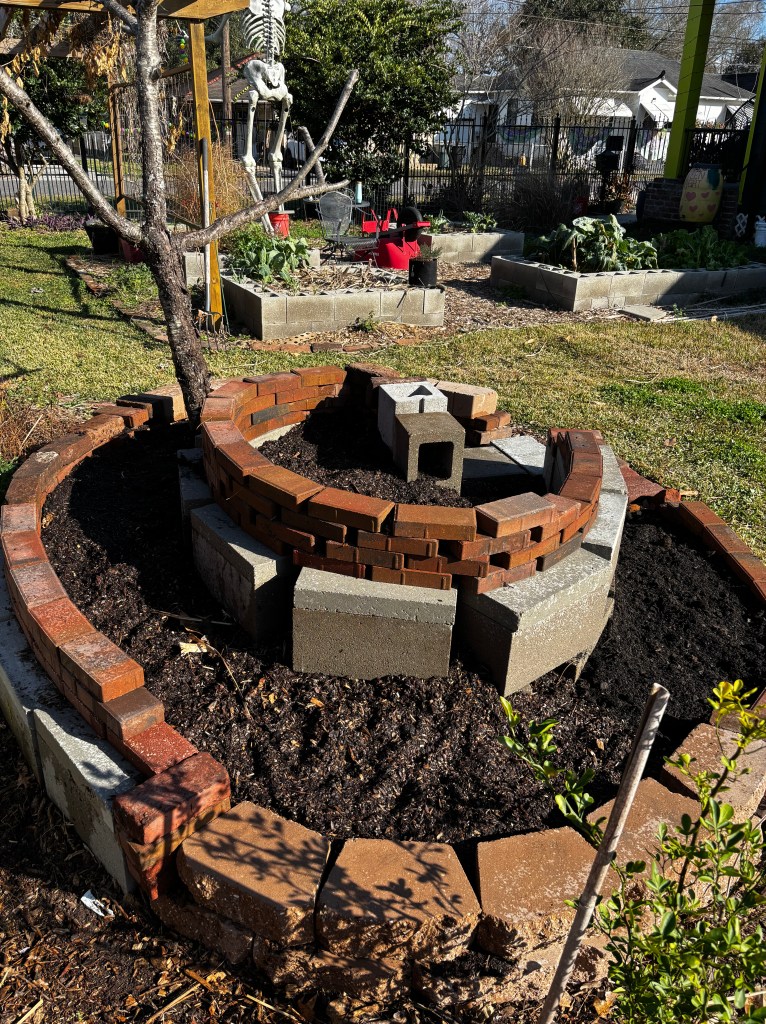
Once you’ve committed to the design, start stacking, ensuring that you have a gradation upwards towards the center. It was here that I made multiple adjustments. Once I saw how many retention stones were needed I started playing around with some of the leftover cinderblocks I had from building raised beds a couple of years ago and realized it would be much more cost effective to buy additional cinderblocks ($1.94) to occupy space and build height quickly [2 cinderblocks = ~5 retention stones]. I also purchased some cinderblock caps ($1.98) to make it easier to stack bricks on top to create the final height.
- The bricks don’t have to be tightly connected at the horizontal. In fact, it’s preferable if they aren’t so water can drain out and down and other mossy plants can grow. Some people opt to mortar or glue down their bricks, but it isn’t necessarily needed. I did not, but I may go back and glue down some of the lower stacks because I’m sure one or both of my dogs will knock those over. If you choose to use mortar, use it only where horizontal surfaces meet and leave the vertical seams to breathe.
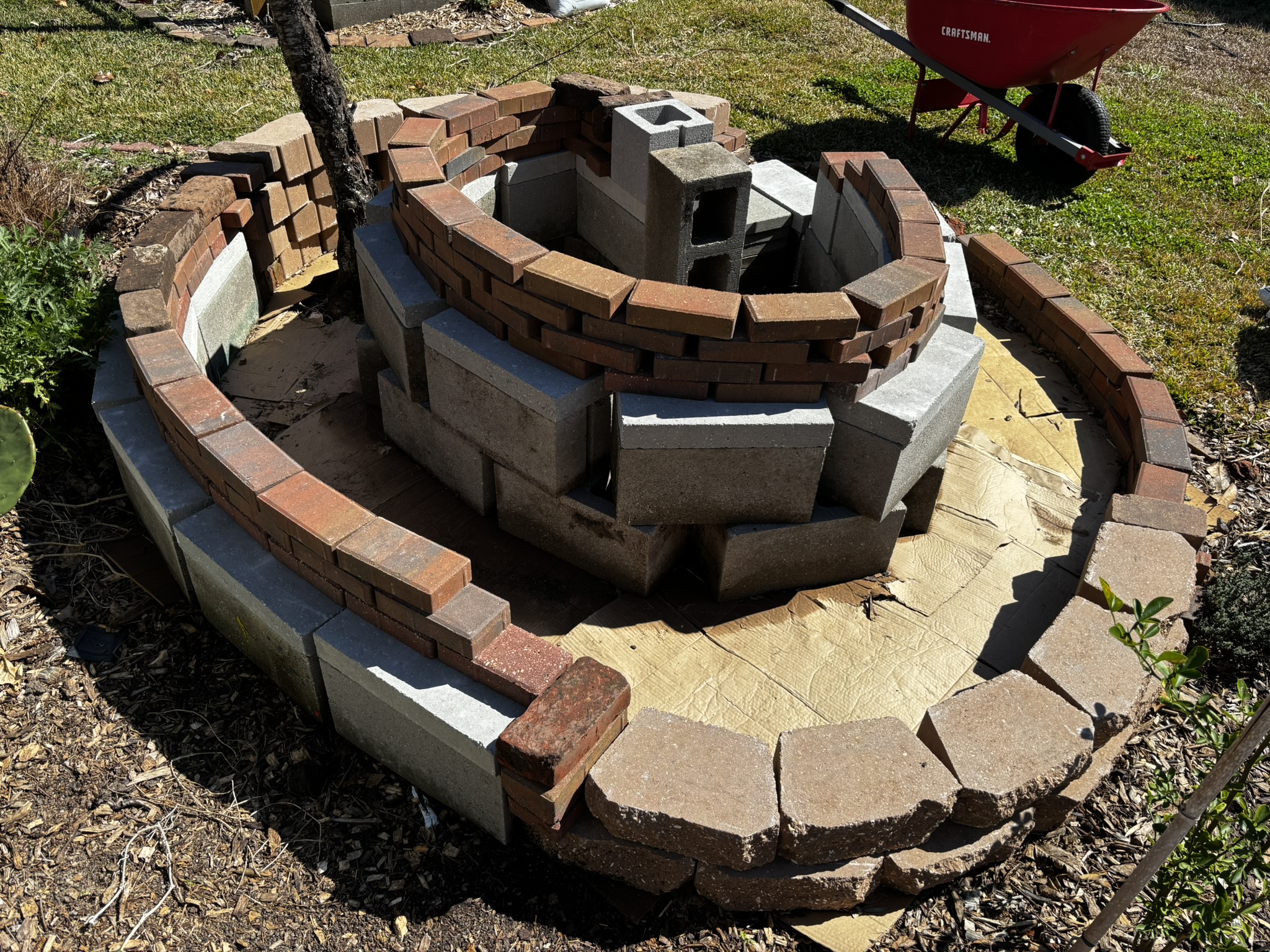
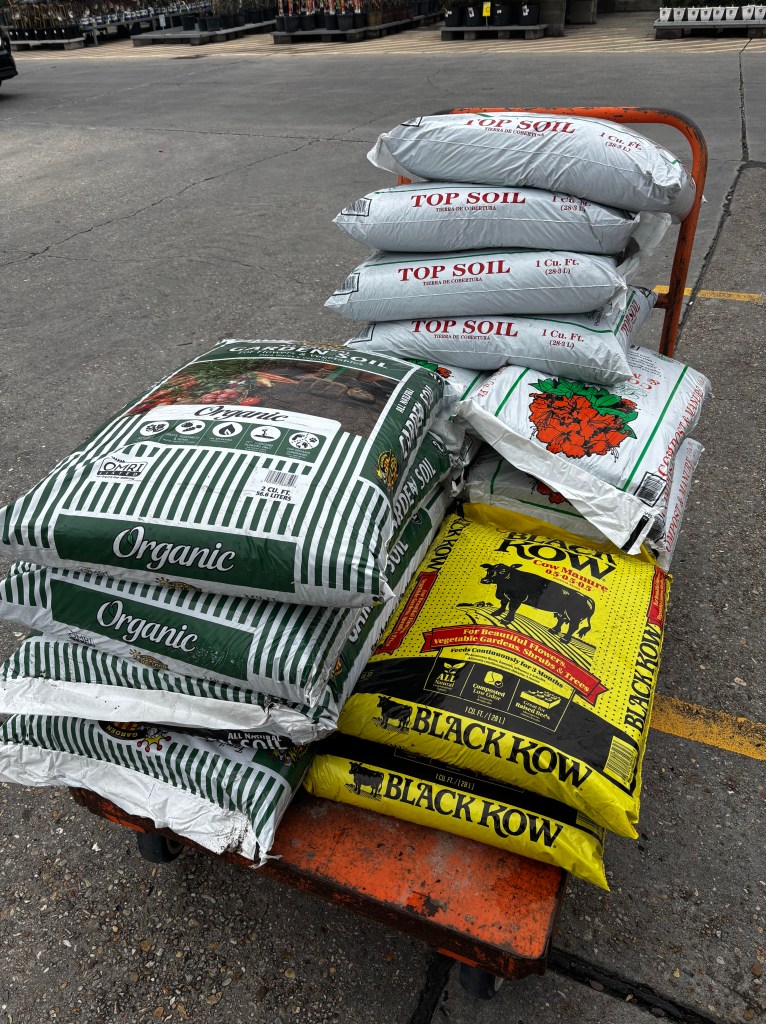
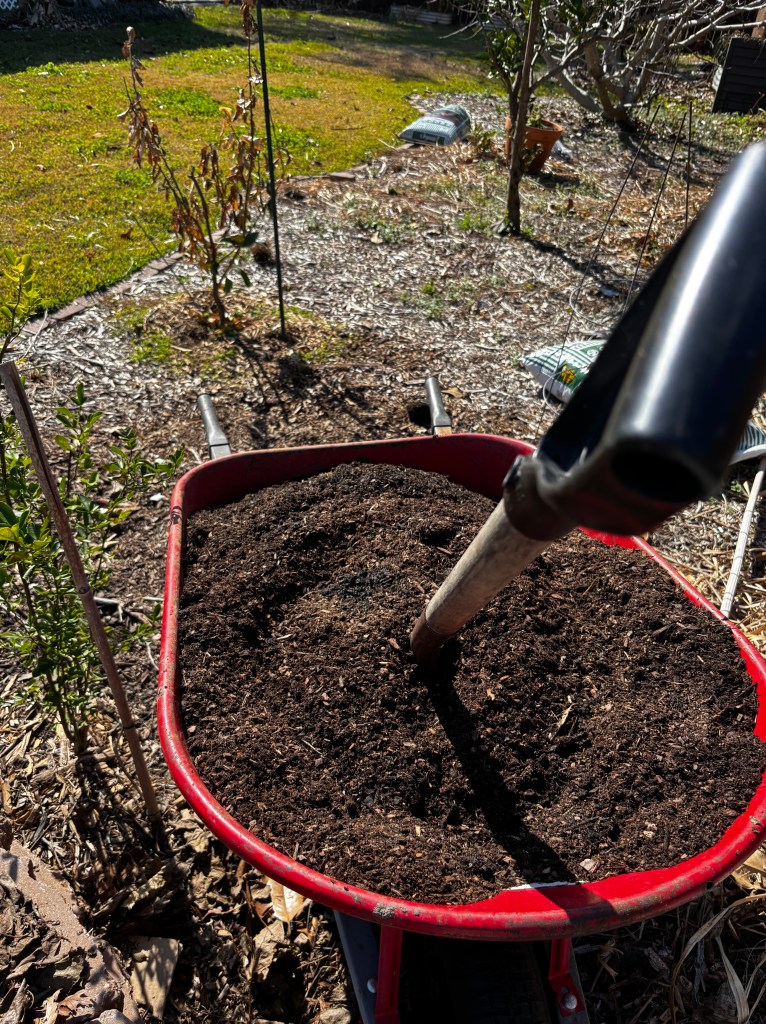
- Once your structure is built, you can place a layer of gravel to facilitate drainage (I did not), and then you want to fill it with high quality soil. I used a mixture of organic garden soil, black kow compost, the cheap compost, and topsoil. Some sharp sand would also probably be a good idea particularly for the plants closer to the top.
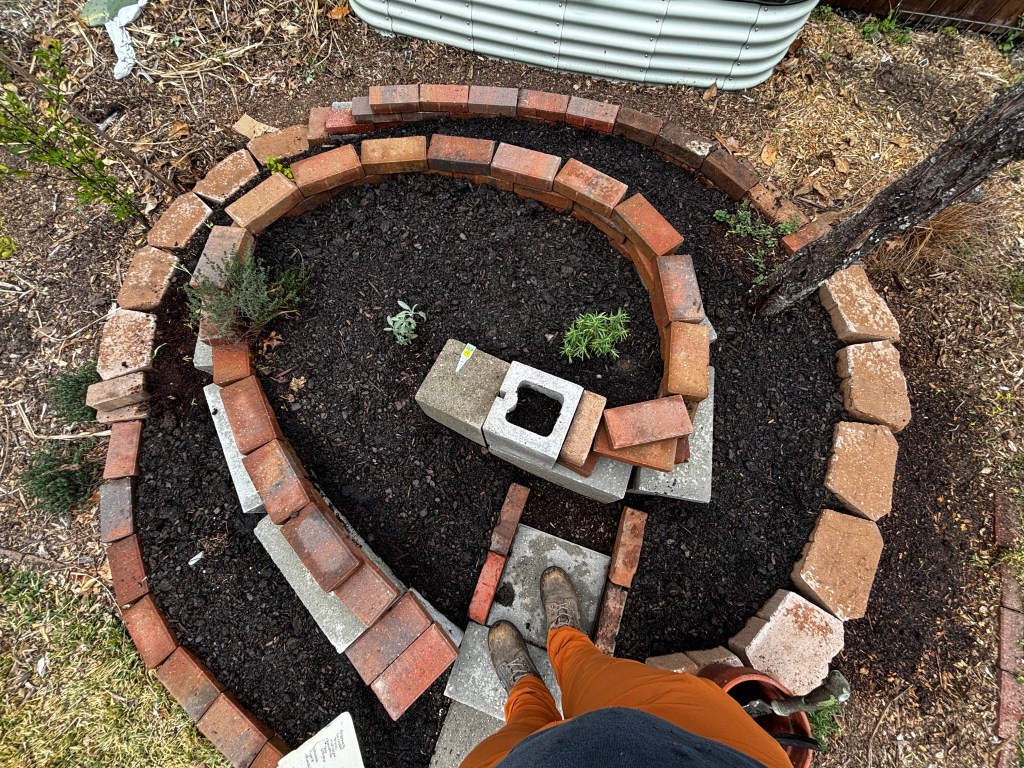
- Then it’s time to layout your plants. Make sure they’re located in the correct location in the spiral based on each plant’s sun and moisture needs. I used a guide available for free online to help determine placement.
- I did a mixture of transplants I already had and then started everything else from seed. Growing from seed can be a real headache, but it is most cost effective. That said, getting a bunch of starter herbs from a nursery will be far more satisfying a finished product.
- If you do a mixture of seedlings and seeds, FIRST you’ll plant the seedlings, water everything deeply, and surround them with a mulch or high quality compost, THEN you’ll water down the entire herb spiral and sow your seeds. The reason for this is because most herb seeds require surface sowing (pressing the seeds into the soil). Once the seeds are in the ground you don’t want to disturb them or cover them in mulch because they need light to germinate.
- My list of plants from top down include: rosemary, lavender, thyme, sage, chamomile, echinacea, oregano, za’atar, wood betony, parsley, tarragon, marigold, lemon balm, calendula, tulsi basil, and mint, with yarrow sprinkled into some of the crevices
Overall
While I didn’t plan to use such mismatched materials between the several types and colors of brick, stone, and cinderblocks, I really liked how it turned out.
Because I started with seed, I will have to take some more care in the first few weeks to keep the soil moist for germination. If the seeds don’t end up taking, I’ll fill it with nursery plants, otherwise it will become a fancy bed of weeds and a red ant motel with nothing planted.
The dimensions for my final project were 8 ft (short side) x 9 ft (long side) x 3 ft (height) – it’s a big structure!
My final cost for this project was about $300 including additional bricks, cinderblocks, cinderblock caps, and the soil mixture. I already had seeds and plants, but on average, 4 inch pots from a nursery are typically $3 – $4 and a pack of seeds ranges from $3.50 – $5.00 with anywhere from 25 – 100 sees depending on the varietal of the plant.
While that might seem pricey, pre-fabricated metal raised beds cost about $150 – $300 ea. and usually max out at 10 linear feet of planting area. The spiral has at least double that, maybe triple (my math on calculating the linear feet of spirals is a bit rusty), and allows plants with different growing conditions to be placed closer together.
All-in, this was more cost effective. If you make a more reasonable sized herb spiral expect the costs to be lower, and if you want one larger or one with nicer materials, expect higher costs.
Final Tips
DO: take your time to prepare the site before getting into the build, more time up front means fewer headaches and redos mid-project.
DO: get creative in the types of plants you include – choose medicinal herbs or even small growing greens like lettuces, especially if you have limited growing space.
TAKE CAUTION: with mints and other aggressive plants. I included mint because so far it seems to self regulate with our volatile weather patterns, but if you’re concerned you can plant it inside of a bottomless pot to keep the roots bound.
DON’T: include tubers (potatoes) or plants that spread by rhizome – they will take over!
DON’T: overthink this – it’s not meant to be perfect and it’s the imperfections in the structure that make it look interesting.





 Viridescent Spaces